
Guide
Why a Cold-Weather Spring Failure in Ashland Isn't Always an Emergency
In Ashland's 1960s and 70s housing stock, cold snaps can break garage door springs fast. Learn when a slow leak of trouble can wait and when it can't.
Local detail
When Waiting Is Fine
Not every spring problem needs a truck out that afternoon. If your door is slow to lift, a little louder than it used to be, or sags an inch before the opener catches it, that's a spring losing tension gradually, not one about to let go. Most houses on this side of Ashland went up between 1956 and 1979, with a median build year of 1970, and a lot of that original torsion hardware is still doing its job, just tired. A door that still opens and closes, even roughly, can usually wait a few days for a scheduled visit rather than an emergency call.
What can't wait: a door that won't move at all, a spring you can see is separated or coiled wrong, or a cable hanging loose. Those mean the door could drop, and a door that drops on someone or something is not a problem you sit on. The honest limit here is that if you're not sure which kind of problem you have, the safest move is to leave the door down and call rather than force it open and closed to test it. Guessing wrong with a loaded torsion spring is how people get hurt.
The area
How Local Conditions Play In
Ashland sits in a climate band rated cold and severe, and that matters more for garage doors than most people think. Steel torsion springs lose a measurable amount of tension as temperatures drop, and the cable and hardware around them get more brittle right when the door has to work hardest against cold, stiff seals and heavier air. A spring that was already near the end of its life carries that cold-weather load poorly, and that's often the moment it finally goes.
This lines up with the age of the housing here. A house built in 1970, the median for this area, is old enough that its original spring has either already been swapped once or is well past a typical service life. Cold doesn't create a new problem so much as it exposes one that was already building. If your door has felt heavier or noisier for a few weeks and a cold stretch hits, that's usually the spring finishing what age started, not bad luck.
What we find
Where People Go Wrong
With a median household income of $53,046 in this area, it's understandable that people try to stretch a fix rather than replace a spring outright, and sometimes that's the right call. Where it goes wrong is when someone tightens a bolt, oils a squeak, or props the door with a board and calls it fixed. That buys a week, not a solution, on hardware that's already past its rated cycles.
Across the service area here, 8,714 households and 5,008 owner-occupied houses mean a lot of those original torsion springs are still on the door, not because anyone forgot about them but because a working door doesn't announce that it's on borrowed time. Westwood, Catlettsburg, Russell, and Flatwoods share the same 1960s and 70s build years as Ashland itself, so the same pattern shows up there too: a spring that's fine until a cold week in January, and then it isn't. The other mistake is trying to release or wind a torsion spring yourself. It's under real load and it's not a weekend project.
How we work
What Is Going On
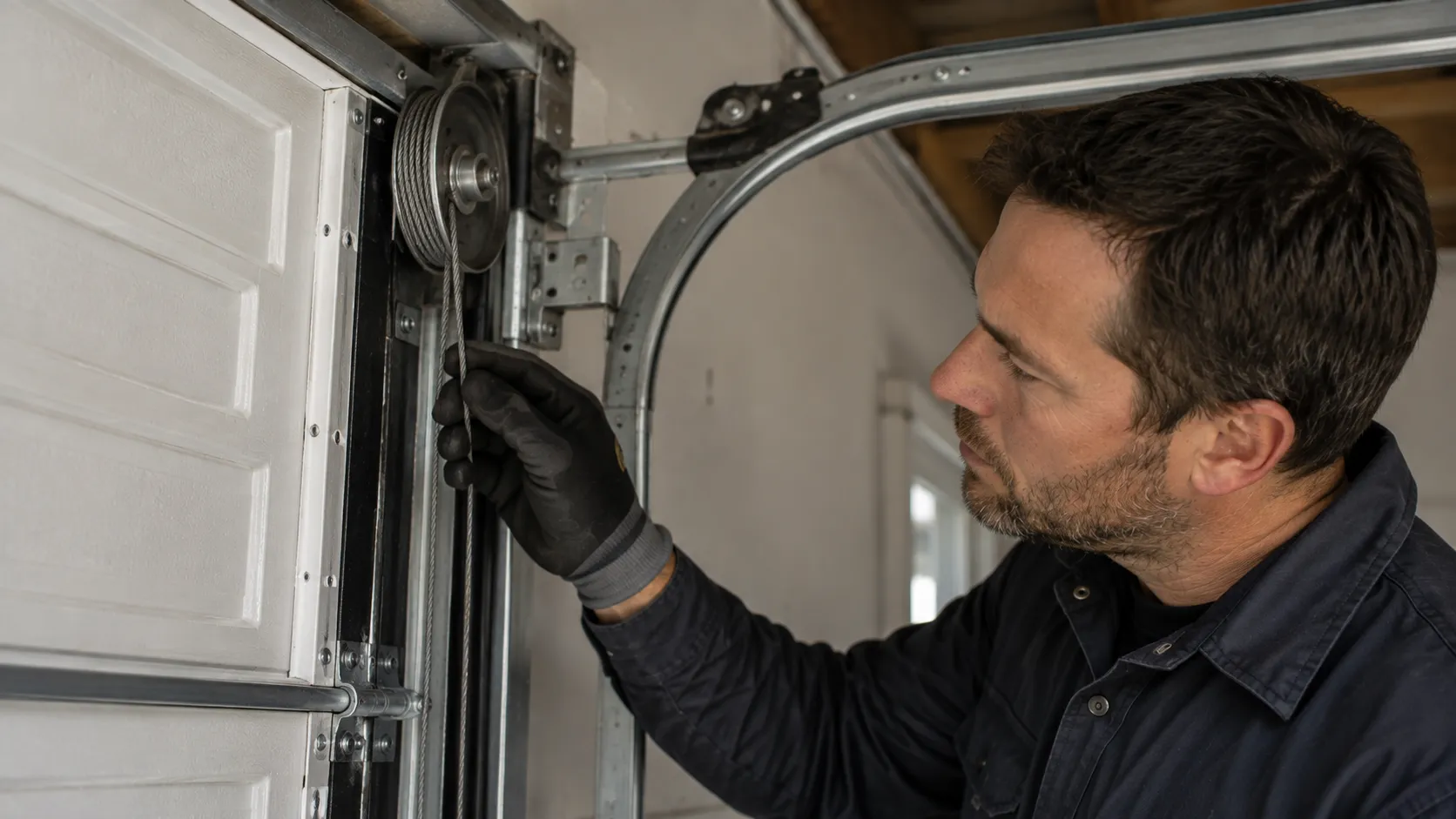
A torsion spring works by storing twist. Every open and close cycle uses a little of what it has, and cold makes the steel less forgiving about giving that energy back smoothly. On a house from the 1970 era, the spring on the door has likely absorbed decades of cycles already, so there's less margin left before it snaps rather than just sags.
When it does go, it's usually sudden: a loud bang, the door stuck at whatever height it happened to be, sometimes a bent track if the door was partway open. That sound is the spring, not the opener. The opener has enough power to lift a door with a broken spring open a few inches, but not enough to do it safely or for long, and forcing it will burn out the motor. Once a spring's gone, the fix is a full torsion spring replacement matched to the door's weight, not a patch, and that's not a job to leave for a warmer month if the door's stuck shut.
Questions
Common questions
My garage door is heavier to lift than it used to be, does that mean the spring is about to break
Usually yes, it means the spring has lost tension gradually, which is common in houses from the 1960s and 70s stock common here. It's not always urgent, but it's worth getting looked at before a cold stretch finishes the job and the door won't move at all.
Is it safe to open my garage door by hand if the spring breaks in cold weather
No. A broken torsion spring means the door has little to no counterbalance, so it can drop fast and hard. Leave it down, don't force the opener either, and call for a same-day look if the door is stuck shut and you need the car out.
Why does my spring always seem to fail in winter
Cold stiffens steel and reduces how much tension a torsion spring can hold, so a spring that was already near the end of its life often lets go during a cold stretch rather than in mild weather. It's usually age catching up, not the cold causing new damage on its own.
Ready when you are
Need a garage door sorted in Ashland?
Ashland Garage Door Pros repairs and installs garage doors, springs and openers in Ashland, KY and the surrounding area.