
Older Track & Header Layouts
Earlier garages can use track mounting and framing dimensions that differ from newer residential construction, so the assembly is checked before parts are ordered.
Local garage door service · Ashland, KY
Garage door repair and installation for Ashland homes built mostly between 1956 and 1979, covering cable repair, off-track repair, opener repair, roller replacement, spring repair, and the residential garage door systems common across the area's 1960s- and 70s-heavy housing stock.
Popular Services
Garage door services
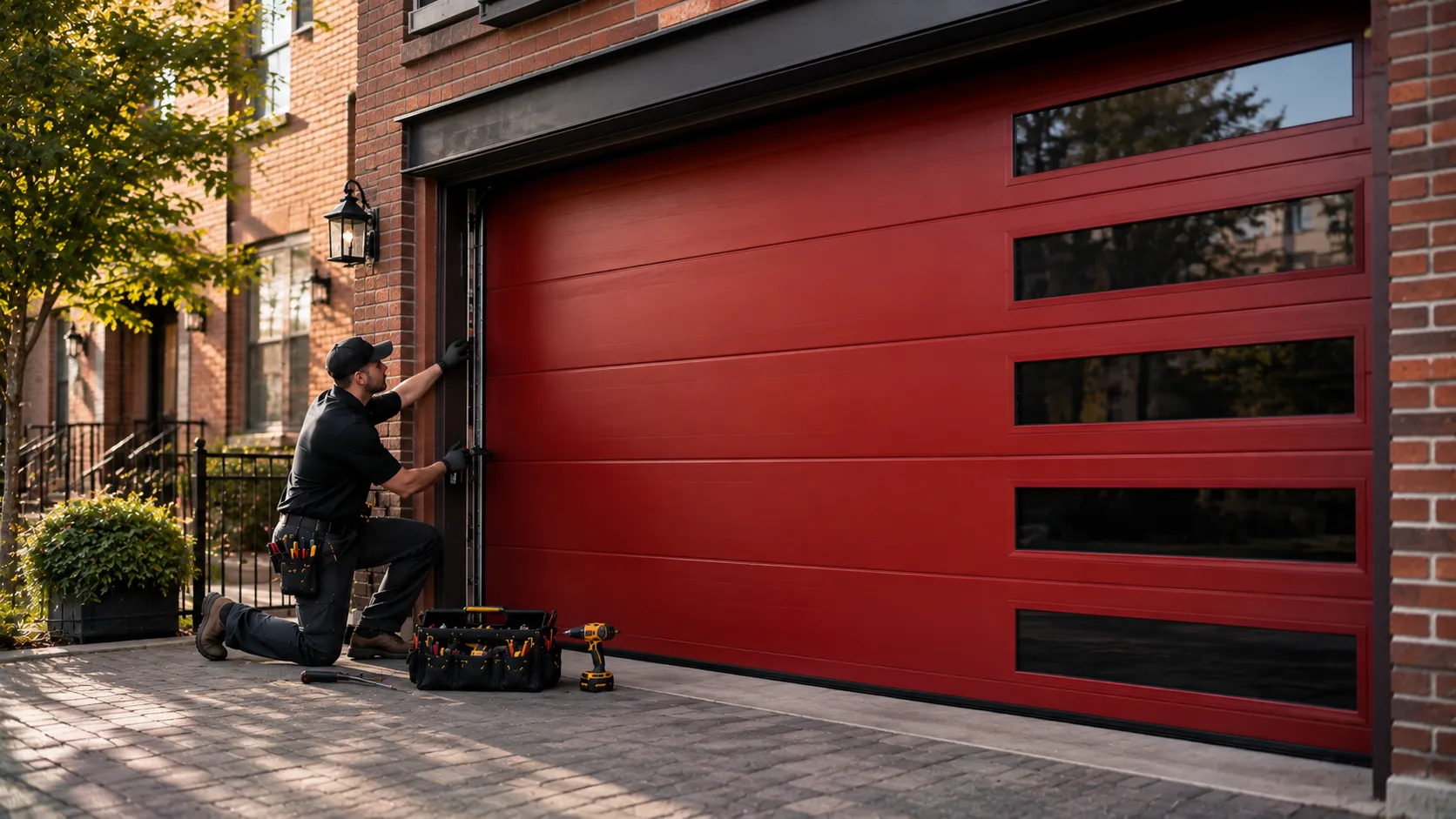
From cable and spring repair to installation, off-track doors, opener problems, roller replacement, and general garage door service, the lineup is built around the systems found across Ashland's older residential housing stock.
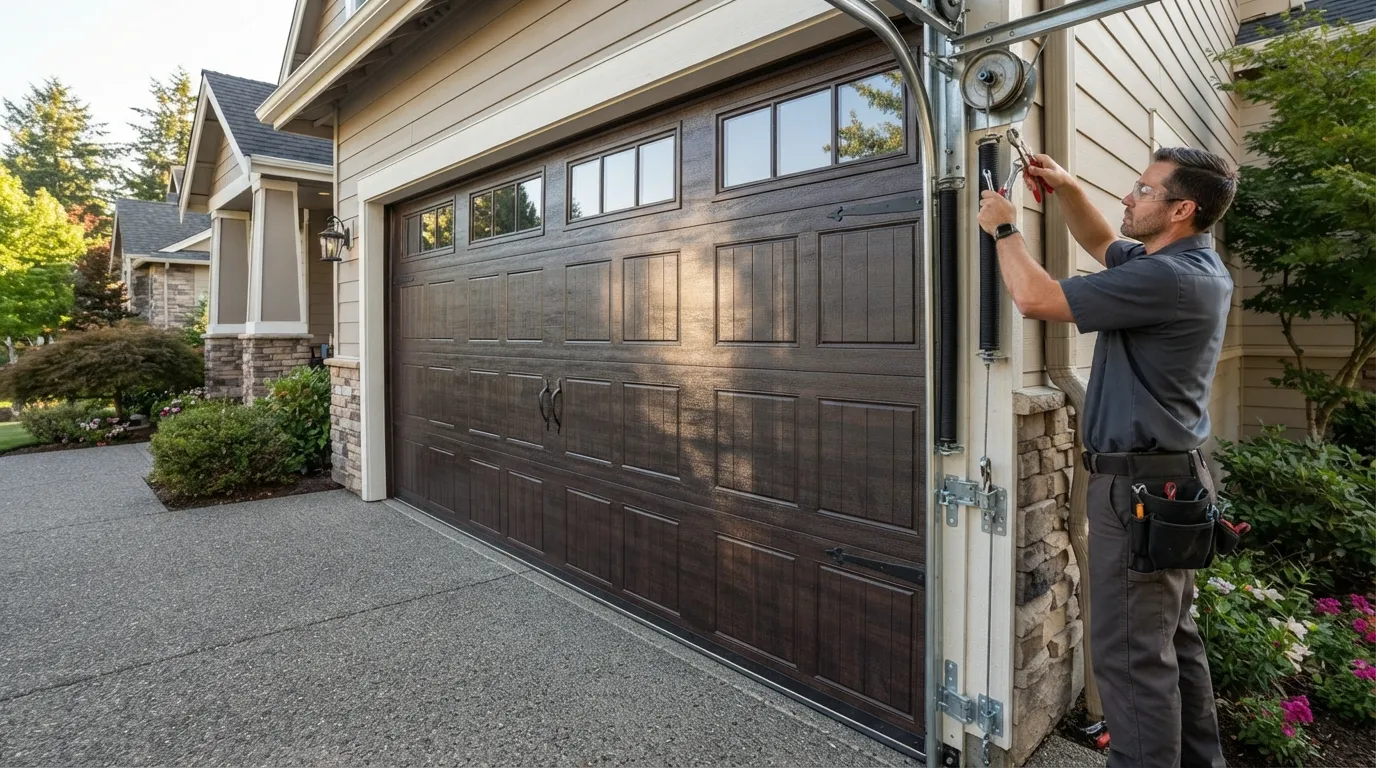
Local housing matters
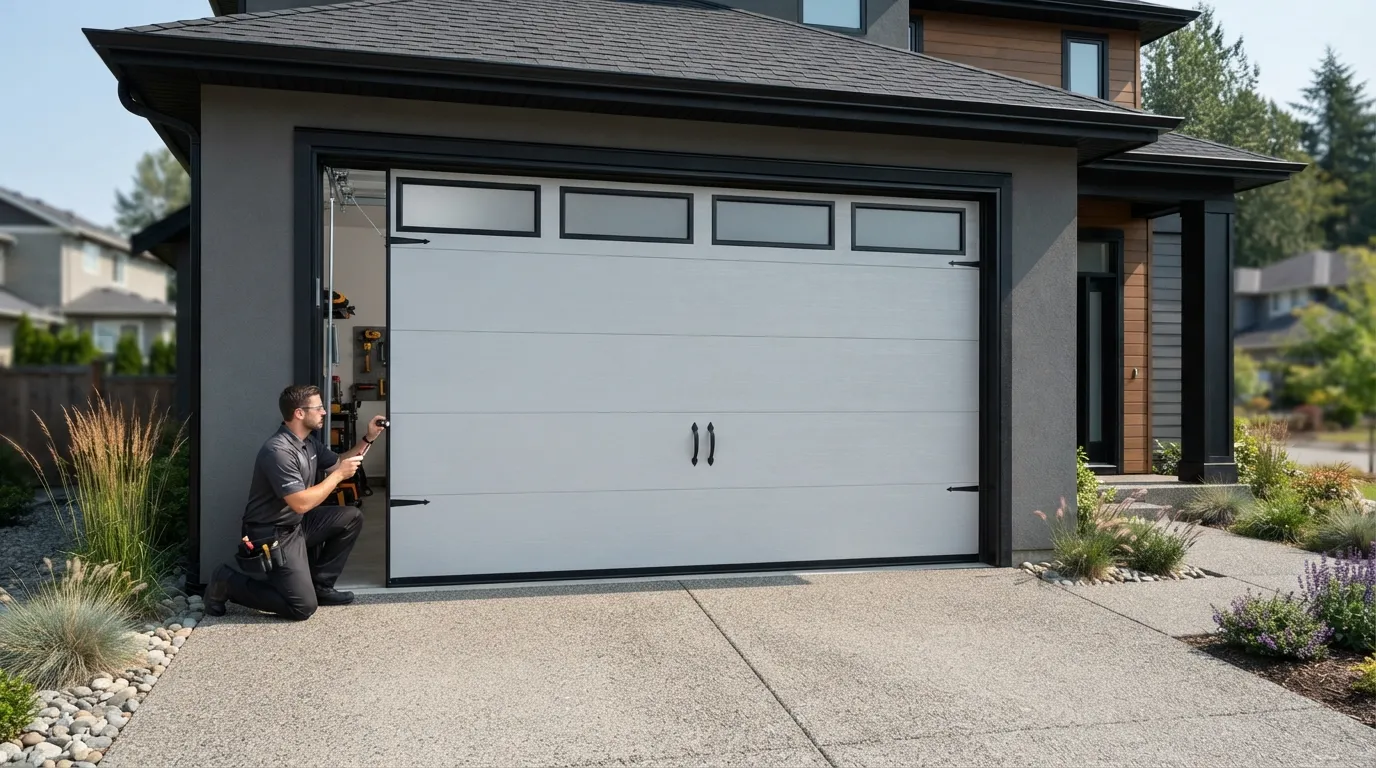
The broader source service area is dominated by housing built between 1956 and 1979, with a median build year around 1970.
That means many garages were originally built around older door weights, header framing, track layouts, and spring systems that may have been updated only one component at a time over the decades.
There are approximately 8,714 households across the broader area, including about 5,008 owner-occupied houses.
Older garage openings can still retain original tracks, brackets, headers, or mounting points even when the visible door or opener has already been replaced.
The house's build year provides useful context, but the correct repair depends on the hardware actually installed today.
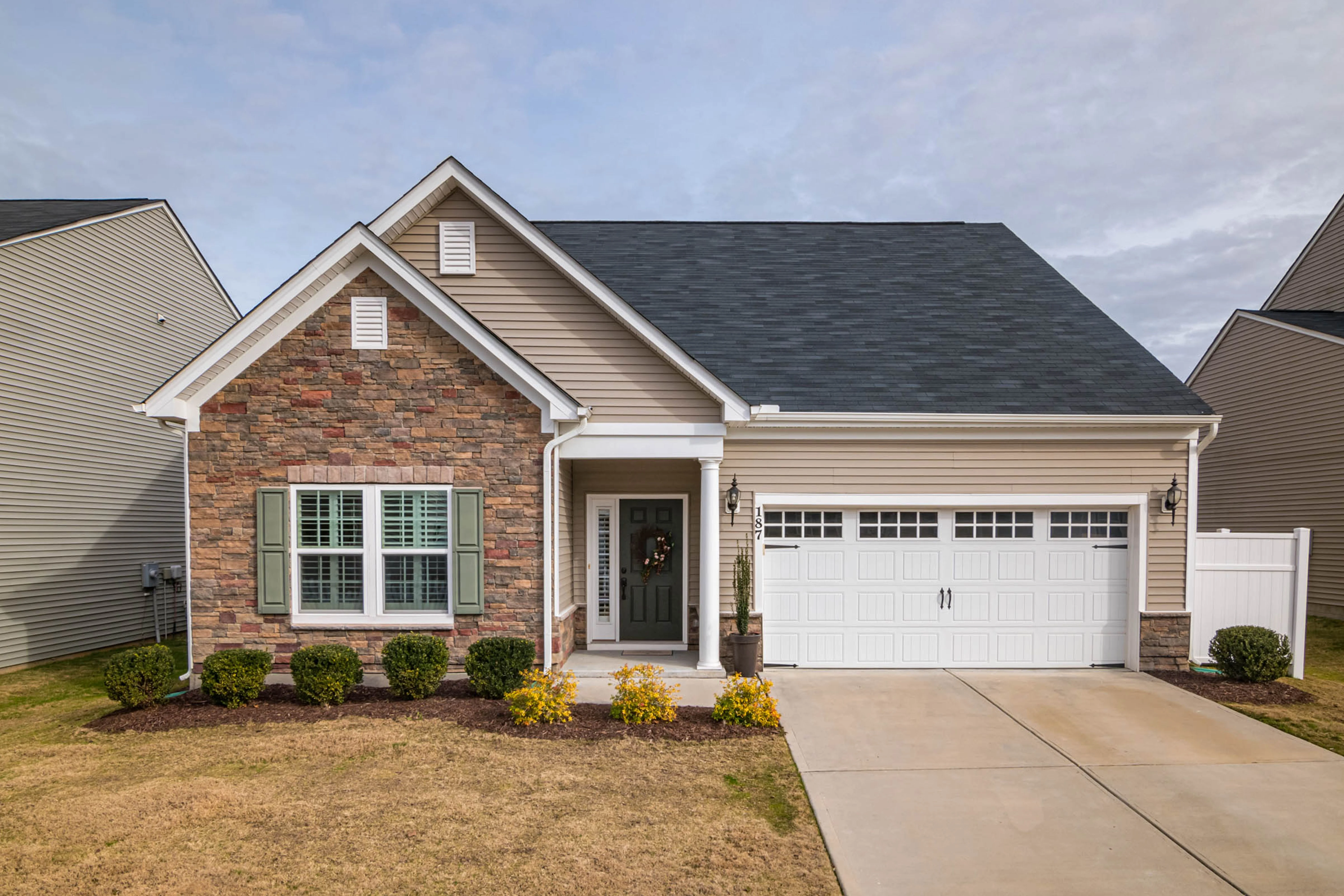
1960s–70s garage door systems
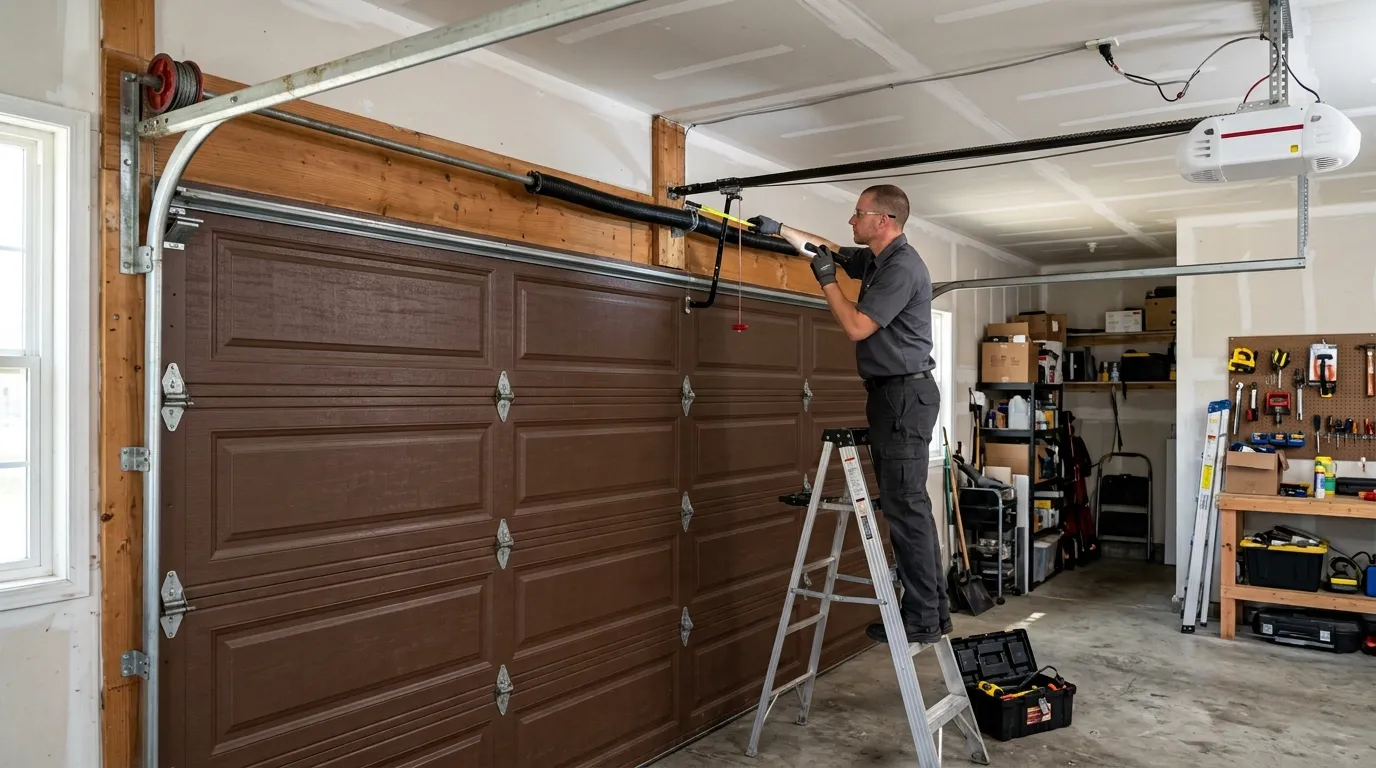
Homes concentrated in the 1956–1979 building window can combine older headers, tracks, spring hardware, replacement openers, newer panels, and several generations of repair work.
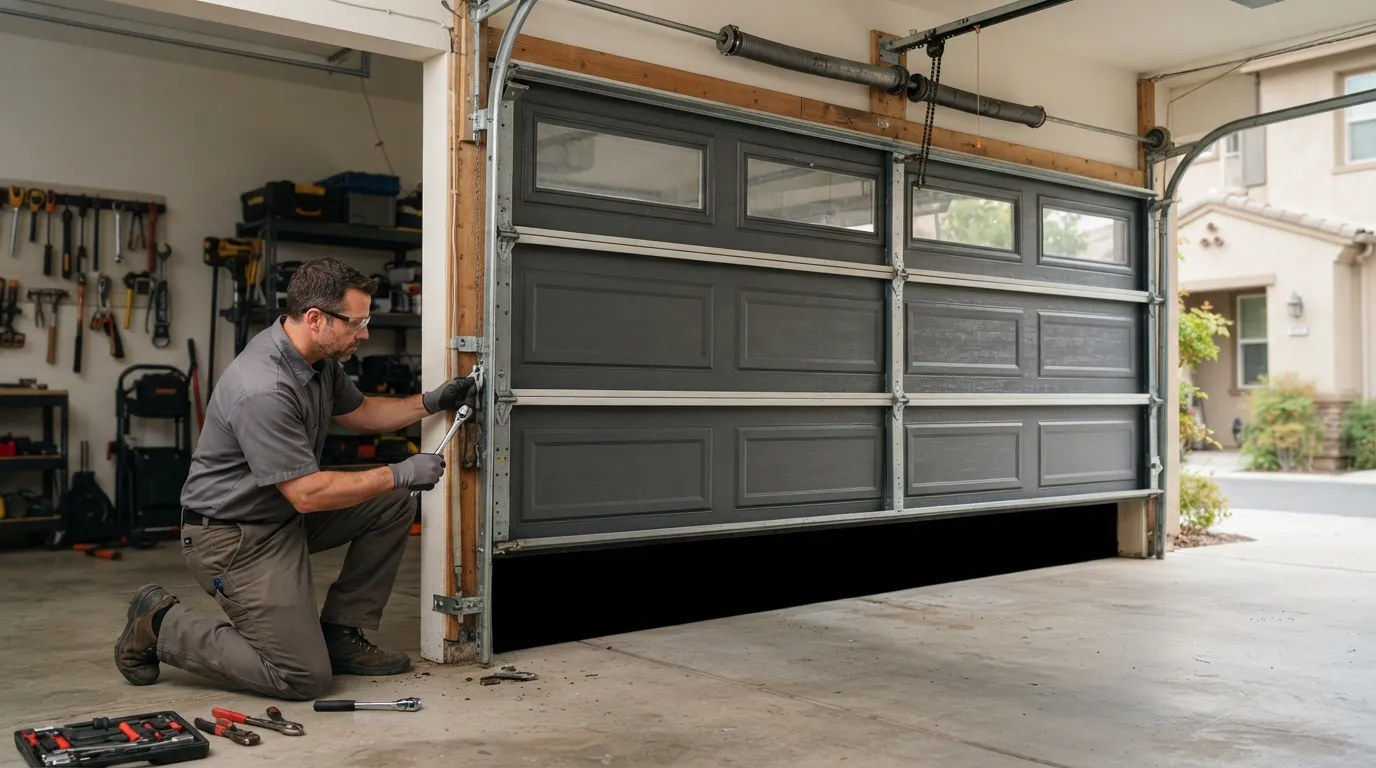
Earlier garages can use track mounting and framing dimensions that differ from newer residential construction, so the assembly is checked before parts are ordered.
Older doors may use spring sizes or mounting configurations that no longer match current off-the-shelf residential setups.
A garage may have newer panels or an updated opener while still retaining older tracks, rollers, brackets, or spring hardware.
Garage openings built decades ago may require closer inspection when heavier modern panels or replacement hardware have been added later.
What to expect
We start with what the door is actually doing, inspect the whole system rather than just the failed part, and explain what we found before any work begins.
Tell us whether the door won't move, a spring snapped, the opener runs without moving the door, or another symptom has appeared. That's the starting point.
We check more than the failed part, because older doors can have several components from the same installation period nearing the end of their useful life.
The failed component, surrounding wear, repair options, and price are explained before work begins, so there are no surprises.
If an older or discontinued component requires specialty sourcing, we explain that before setting the repair timeline.
Some Older Parts May Need Sourcing
Older spring, track, opener, or specialty hardware may not be standard truck stock and can require additional sourcing.
Common Ashland garage door problems
Broken springs, worn rollers, cable problems, off-track doors, older opener systems, and aging hardware make up much of the work across Ashland's older housing stock. Broken torsion springs are the most common repeat need; roller wear and cable problems recur on doors that have run for decades with only partial hardware updates; openers may already be on their second or third replacement while surrounding tracks or springs stay much older — and full-panel replacement is less common than targeted mechanical repairs.
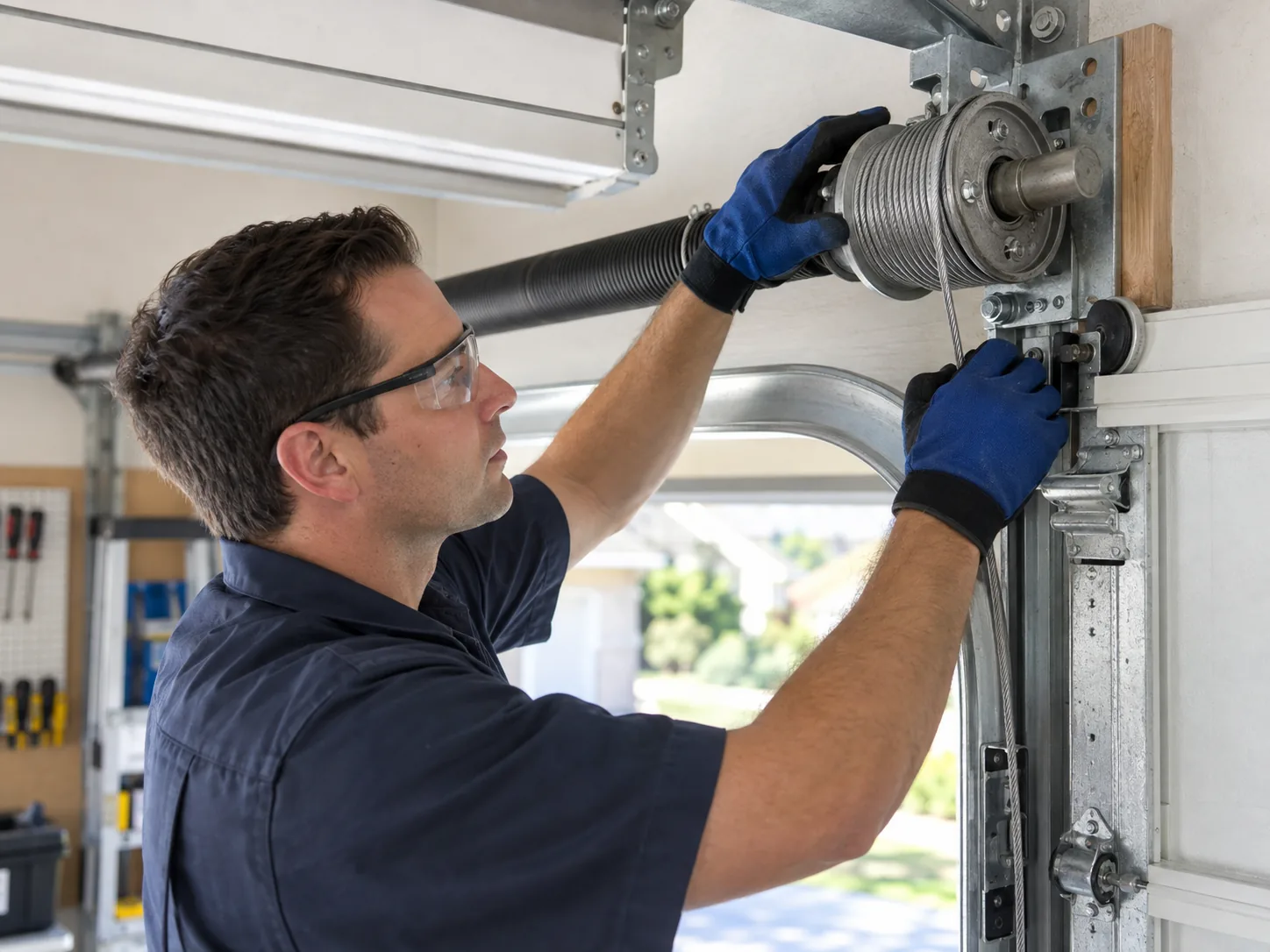
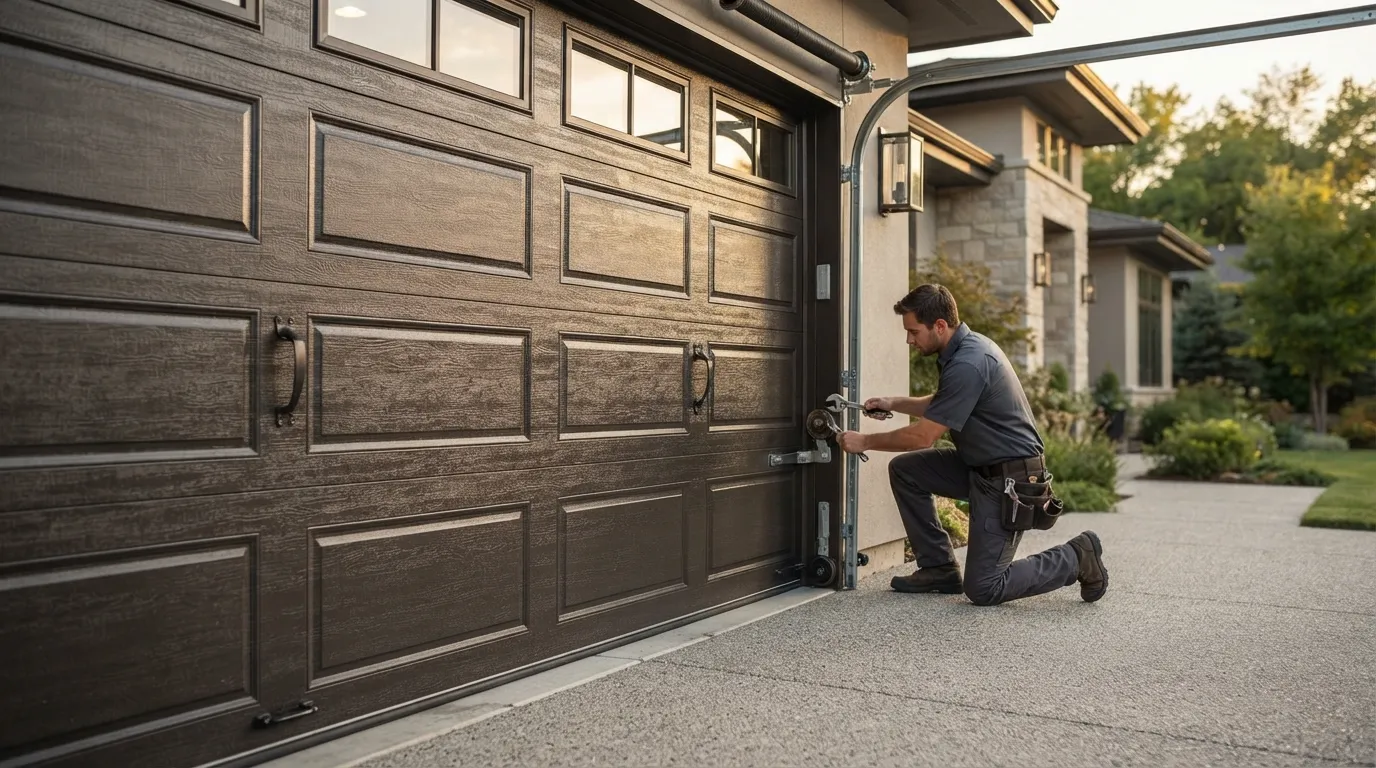
Garage door springs eventually reach the end of their useful cycle life after years of repeated opening and closing, and they're the most common repeat call here.
Cables can fray, loosen, slip, or fail after years of carrying repeated lifting loads, often on doors that have had only partial hardware updates.
Older rollers can become noisy, rough, cracked, or resistant after years of travel through the track, which puts extra strain on the opener.
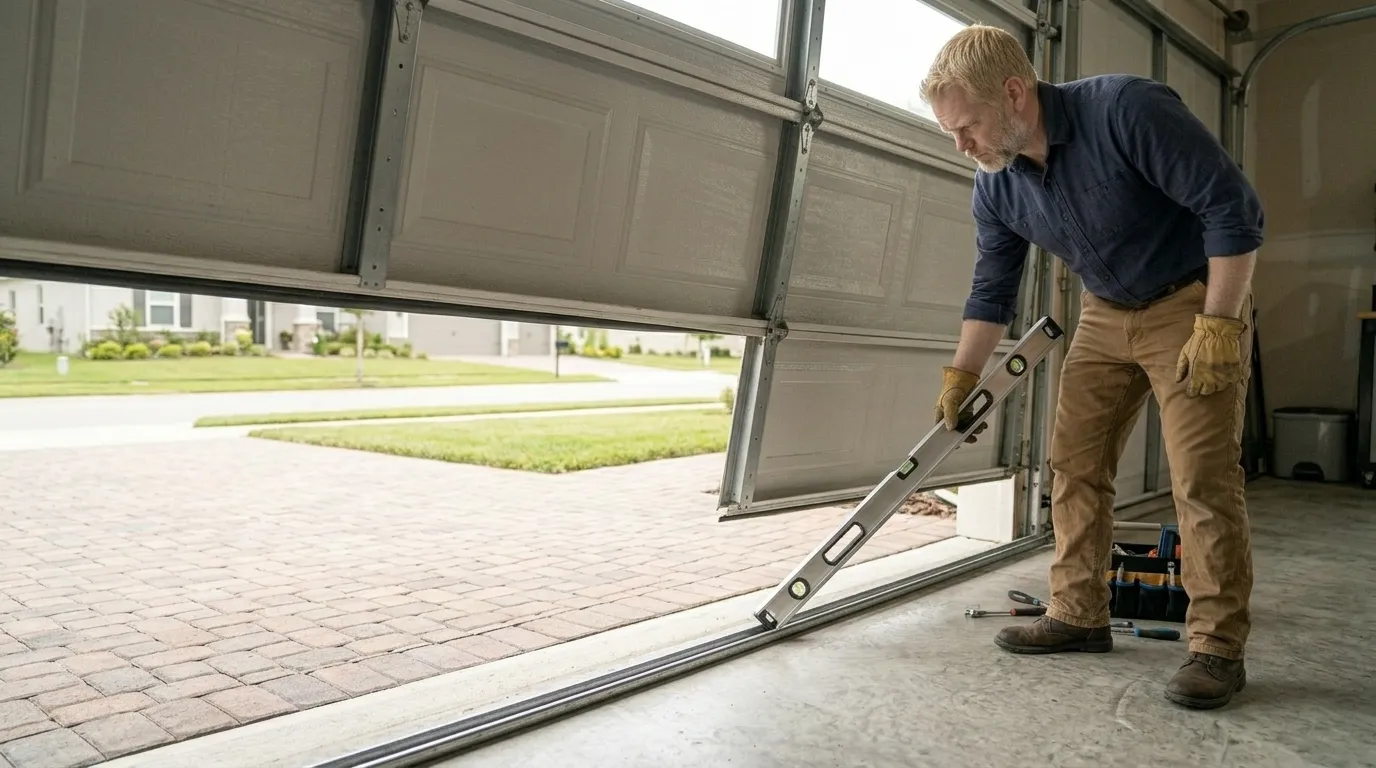
Cable problems, roller failures, impact, or alignment issues can leave a garage door crooked or outside its normal track path, so the fix addresses the cause.
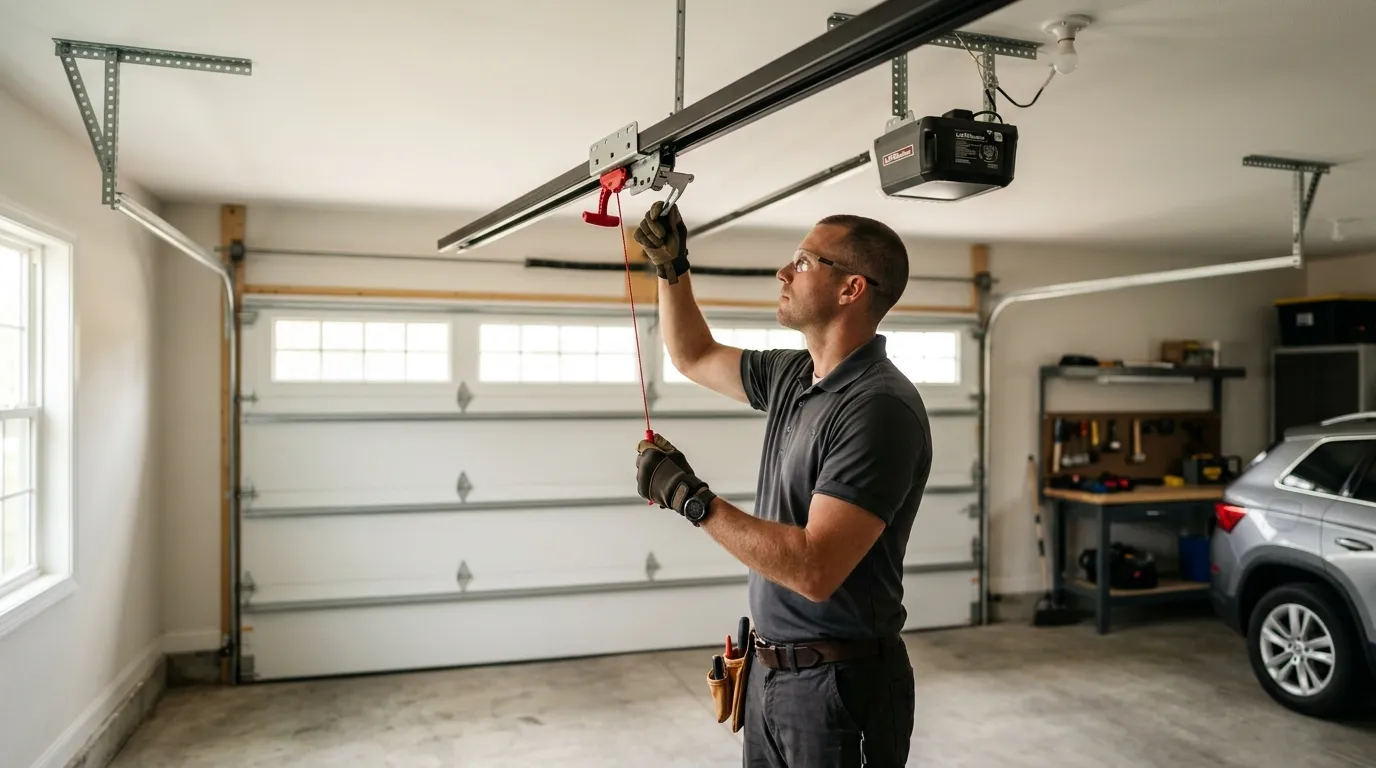
Older opener motors, gears, controls, sensors, and drive systems can eventually develop faults after years of service, sometimes on a second or third unit.
Cold-weather garage door wear
The area has severe cold conditions, and winter weather can make existing weakness in older springs, cables, rollers, tracks, seals, and opener systems far more noticeable.
Cold-weather operation can expose weakness in a spring that is already approaching the end of its useful cycle life, which is why springs often let go in a hard freeze.
Existing cable fraying or tension problems can become easier to notice when the complete lifting system is under additional winter resistance.
A marginal roller or slightly misaligned track can become more noticeable when colder conditions make the door move less freely.
An older opener can work harder when springs, rollers, or tracks are already adding resistance to the door, which shows up first in the cold.
Clear repair guidance
There isn't a flat repair price, because hardware condition can vary significantly even between similar-looking doors.
An older torsion setup with a deteriorated shaft, track, or mounting hardware can require a different scope from a straightforward spring replacement on a cleaner system.
Median household income across the broader service area is approximately $53,046.
We explain what the repair actually needs and let the homeowner decide rather than pushing unnecessary work.
If repeated repairs are approaching the practical value of replacing an aging door, that comparison is discussed instead of continuing to patch the system indefinitely.
Built around Ashland garage doors
The right repair depends on the springs, cables, rollers, tracks, opener, panels, header, and previous changes actually installed on the garage door today — not a generic national parts list.
Older systems can have several components from the same installation era approaching the end of their useful life together, so more than the failed part gets checked.
Older tracks and headers should be evaluated when newer panels or replacement hardware have been added over the years.
If a targeted repair solves the actual failure and the rest of the system remains sound, complete replacement isn't the default recommendation.
If older or discontinued hardware needs specialty sourcing, the repair timeline should reflect actual availability rather than an optimistic guess.
Repair or replace?
A broken spring, cable, roller, opener, or localized track problem does not automatically mean the complete garage door needs replacement. Replacement becomes more practical when several major components or the door structure itself are already deteriorated.
A targeted repair can make sense when the panels, tracks, rollers, opener, and surrounding hardware remain serviceable. One failed part is no reason to replace a sound door.
Worn rollers and manageable alignment problems can often be corrected without replacing the entire garage door, restoring smooth travel.
Replacement becomes more practical when critical parts from an older system are no longer realistically available or worth sourcing.
If springs, rollers, cables, tracks, and opener components are all reaching the end of their useful life together, broader replacement may offer better long-term value.
Service areas
Questions
Yes. We regularly cover Westwood, Catlettsburg, Russell, and Flatwoods, and we'll take jobs out to Greenup or Grayson when needed. Call and tell us where you are and we'll let you know how soon we can get there.
This area sits in a cold, severe climate zone, and steel hardware contracts in a hard freeze. A spring or cable that's been marginal for a while often finally lets go on the coldest morning of the season, not because winter caused the wear, but because it exposed it.
It can. A lot of the stock in this area was built between 1956 and 1979, and doors from that period were hung on hardware sized for older standards. We check the whole track and header assembly, not just the failed part, before we quote the job.
No. Most doors from this area's housing stock can be repaired rather than replaced. We only recommend replacement when the repair cost starts closing in on what a new door would run over the next few years.
Ready when you are
Tell us what the door is doing and we'll help you figure out whether you're dealing with a spring, cable, roller, track, off-track door, opener issue, aging hardware, or a system that's reached the point where replacement makes more sense.