Catlettsburg, Ashland

Roller Replacement for Catlettsburg's 1950s-Era Garage Doors

Most Catlettsburg garage doors date to the mid-1950s. Here's why worn rollers on that era of door fail the way they do, and what the fix actually costs.

Roller Replacement for Catlettsburg's 1950s-Era Garage Doors in Ashland
Serving Ashland, KYBackground-checked techsHonest, upfront pricingFast local response

Watch-outs

The Complications

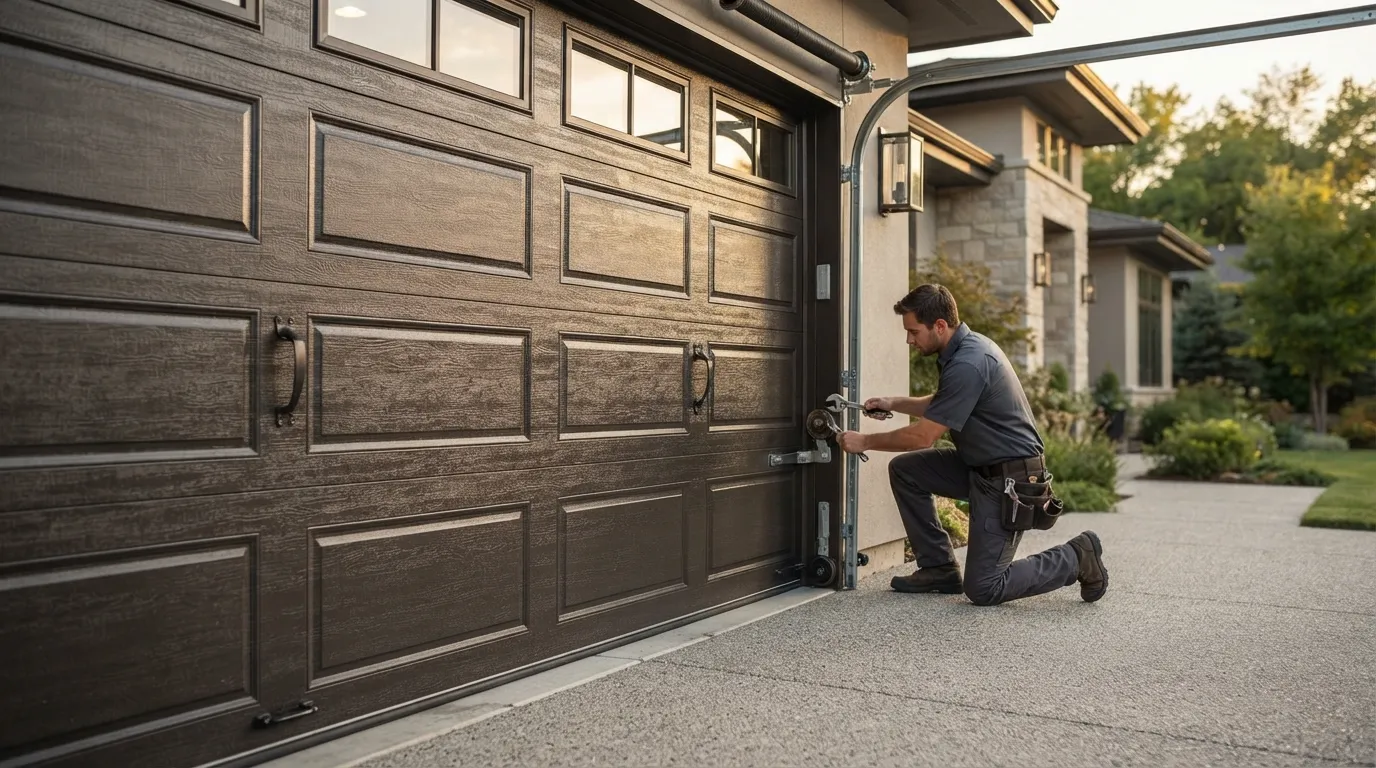
A door built when Catlettsburg was going up around 1956 is not the door you'd get today. Most of what's on the street is a single-layer steel or wood-panel door, hung in a standard single 8 or 9-foot opening or a 16-foot double, on steel rollers that were never sealed or lubricated for life. Nobody was running nylon rollers on residential doors back then. The rollers we pull out of these openings are usually the original steel stem rollers or a mid-life steel replacement from whoever owned the house before - plain steel wheel, open bearing, riding a track that's often been reshaped by decades of that same wear. The complication isn't the roller itself, it's what's built around it: track brackets rusted into place, hinges that were never meant to take a nylon roller's slightly different stem length, and in some cases a track that's been bent enough over the years that a straight swap won't true it back up. You're not just changing a part, you're figuring out what the last 65-plus years did to the assembly around it.

The Complications
Time on the Job

Job timing

Time on the Job

We come out from Ashland, four miles up the road, so there's no long-haul charge built into a Catlettsburg call. Once we're on site, a straight roller swap on a door that's still moving reasonably well - just noisy, or dragging on a couple of rollers - is a same-visit job. Where it runs long is when the track itself needs straightening or replacing alongside the rollers, which is common enough on a door frame this age that we plan for it rather than treat it as a surprise. We won't quote a firm turnaround here because that depends on what we find once the door's open, but a roller-only job doesn't typically eat the whole afternoon.

The repair

What the Fix Involves

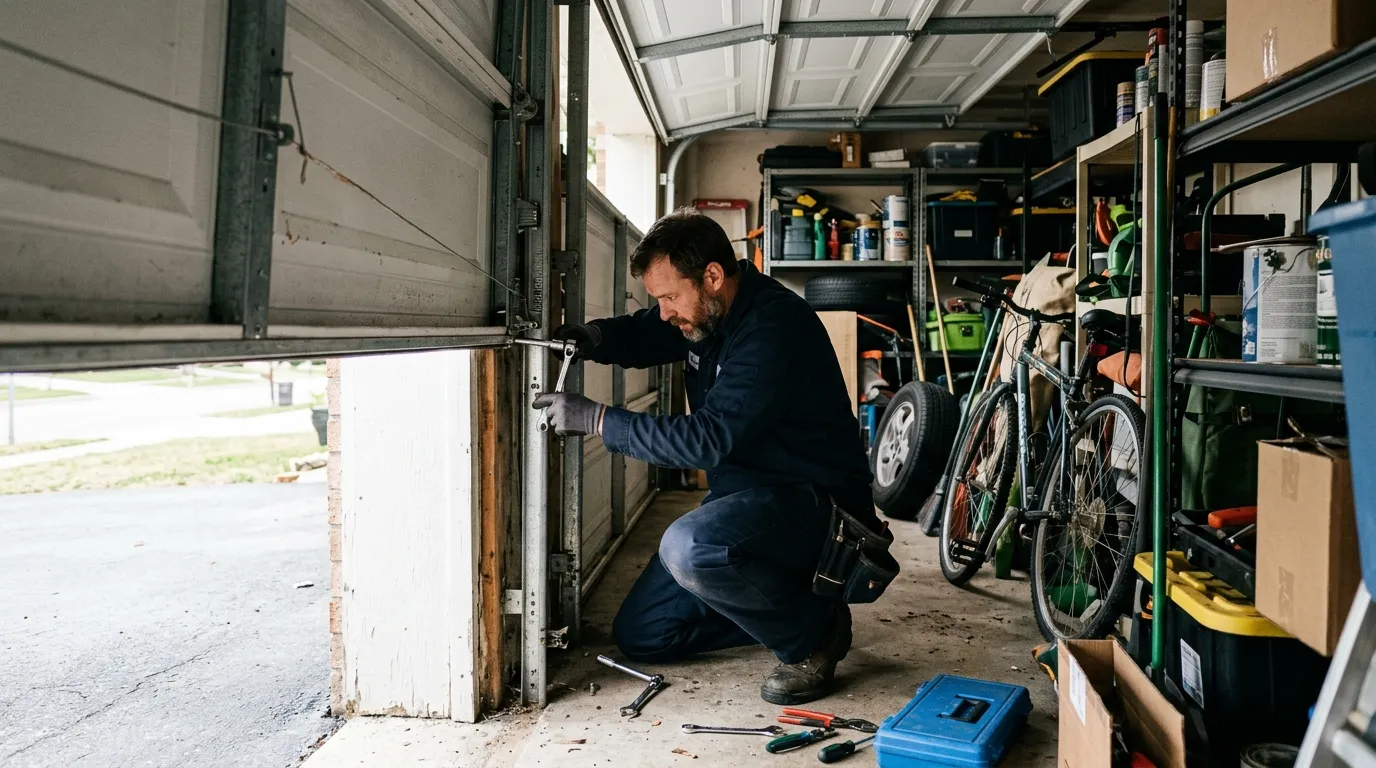
On a door this old, we pull every roller, not just the ones that are obviously shot, because if one steel roller on a 1956-era track has worn out, the rest are close behind on the same schedule.

Track Flare Worn Roller

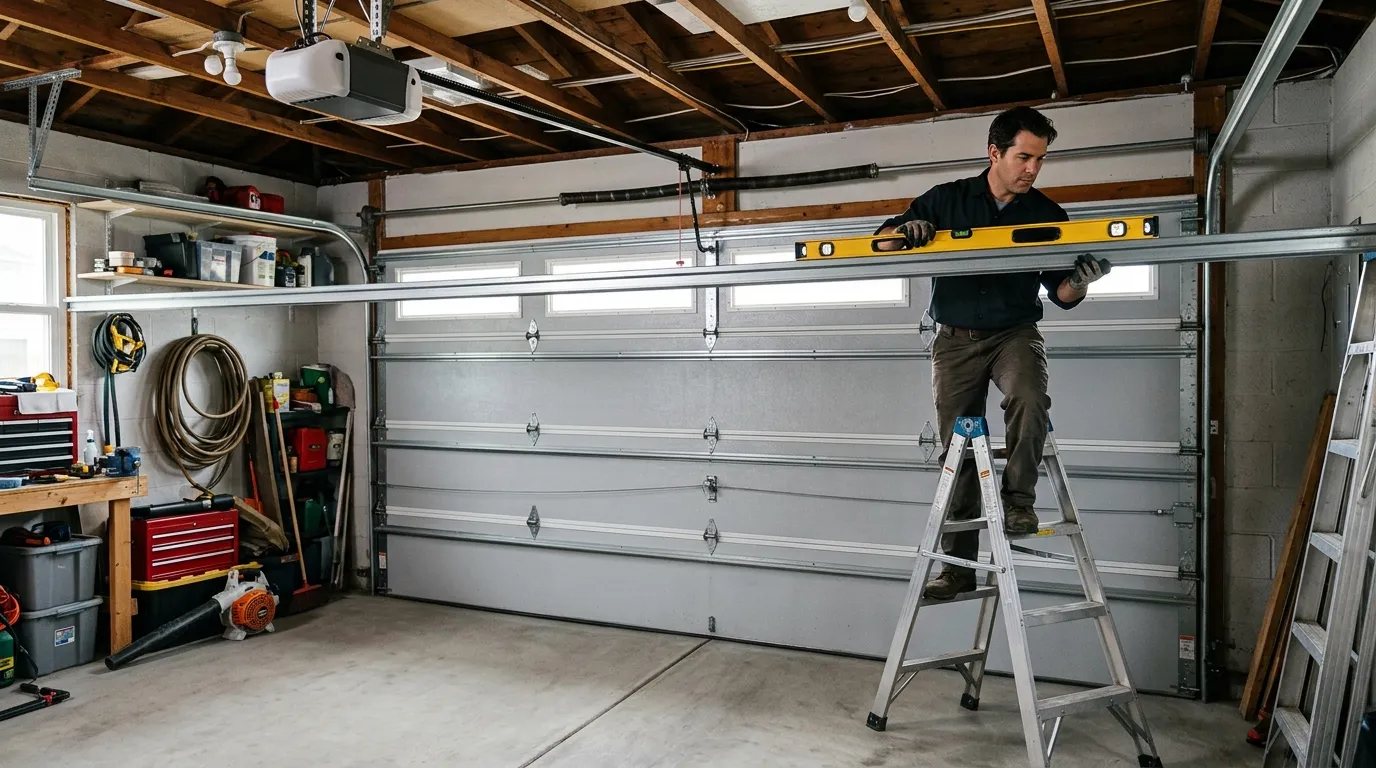
We check the track for the flare and bend that steel rollers cause over time, since a new nylon roller in a worn track will still jump. Where the income picture in Catlettsburg runs lower than the wider service area - median household income here sits around $34,524 - a full roller set with a track tune-up is usually the fix we push for over a door replacement, because it gets the door running quietly and safely without the cost of a full new unit.

Bent Track Rust Through

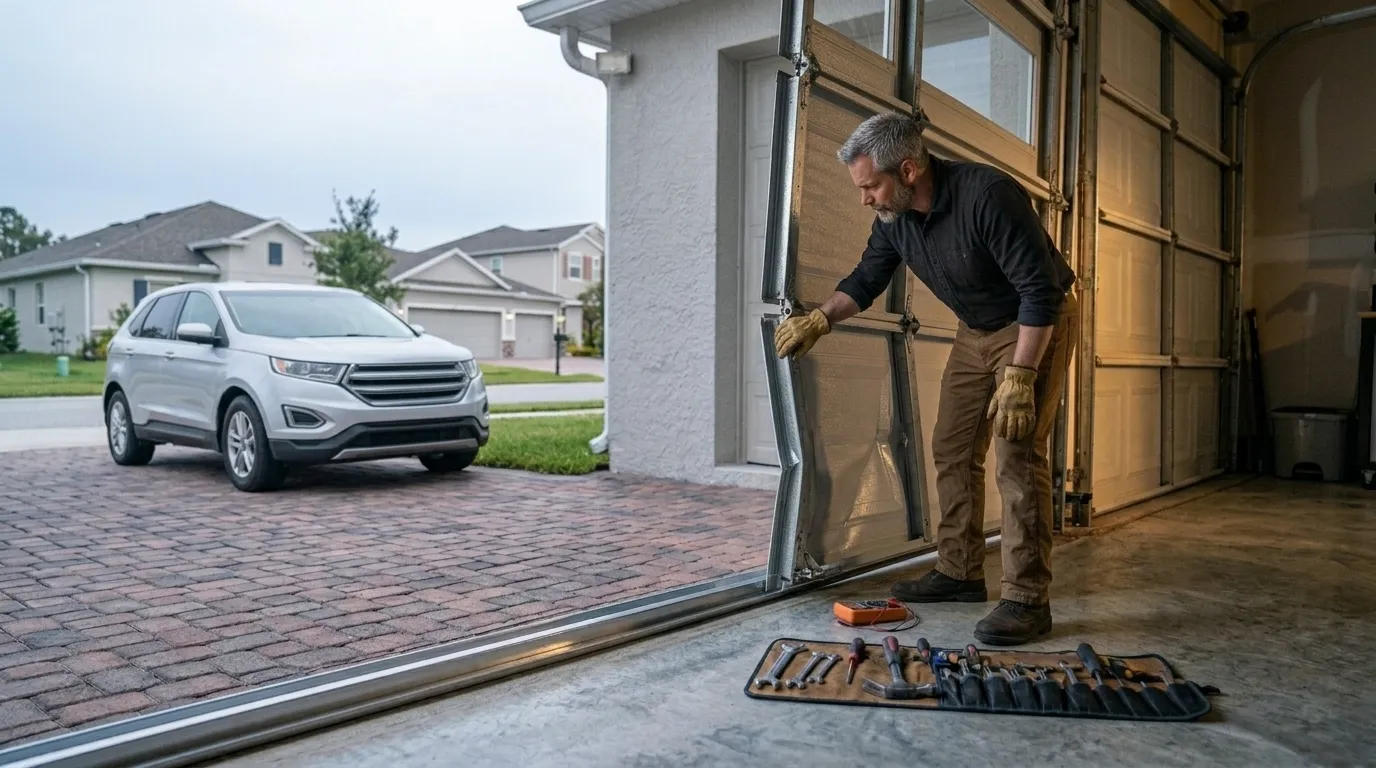
That's the honest limitation: if the track is bent badly enough, or the door panel itself has rusted through at the bottom, rollers won't fix it, and we'll tell you that instead of billing you for a part that won't hold.

The Symptom

Symptoms

The Symptom

The complaint we hear from Catlettsburg is almost always the same: a grinding or scraping noise partway through the door's travel, sometimes with a visible hop as the door crosses a section of track. That hop is the tell. It means a roller has worn down enough that it's no longer riding smooth in the track channel, and it's catching on the edge instead. Left alone, that catch wears a groove into the track itself, which turns a $20 roller problem into a track replacement. A door that's merely loud but running level is a different repair than one that's hopping - we ask about both on the phone before we ever quote anything.

Local causes

What Causes It Around Here

Catlettsburg's roughly 728 households sit mostly in housing built before 1980, much of it dating to that mid-1950s wave, which means original or first-generation replacement hardware is still doing the work. Steel rollers on doors that age were never built to run 60-plus years, and this region's winters push into the cold-severe band on the federal climate scale - the kind of cold that stiffens grease, shrinks metal tolerances, and makes a marginal roller finally seize or crack. We see the failures cluster in the first hard cold snap each year, not because the door broke overnight, but because a roller that was already worn ran out of room to keep working once the temperature dropped.

What Causes It Around Here

Questions

Common questions

Why do my rollers sound worse in winter?

Cold tightens metal tolerances and stiffens old grease, so a roller that's been slowly wearing all year finally catches or seizes once temperatures drop into the cold-severe range we get here. It's rarely sudden damage - the wear was already there.

Do you replace just the bad rollers or all of them?

On a door built in the 1950s-70s range, we generally recommend replacing the full set. If one steel roller has worn out from age, the others on the same track and schedule are close behind, and mixing old and new rollers just moves the next failure a few months down the road.

Is roller replacement always enough to fix a noisy door?

Not always. If the track has flared or bent from years of steel rollers riding it, new rollers alone won't stop the noise or the hop. We check the track before quoting, and we'll tell you plainly if it needs straightening or replacing alongside the rollers.

How far out is Catlettsburg from your shop?

About four miles from our Ashland location. That's close enough that we don't add any travel surcharge for jobs in Catlettsburg.

Ready when you are

Need a garage door sorted in Ashland?

Ashland Garage Door Pros repairs and installs garage doors, springs and openers in Ashland, KY and the surrounding area.

Call NowGet a quote