
Decades of hardware loosening
That fourteen-year gap matters because track brackets, jamb hardware, and the wood framing they're screwed into have had more decades to work loose, rust, or shift with the house settling.
Catlettsburg, Ashland
Catlettsburg homes date to 1956 on average, older than most of the service area. That age shows up as off-track doors. Ashland Garage Door Pros covers the 4-mile drive.
Watch-outs
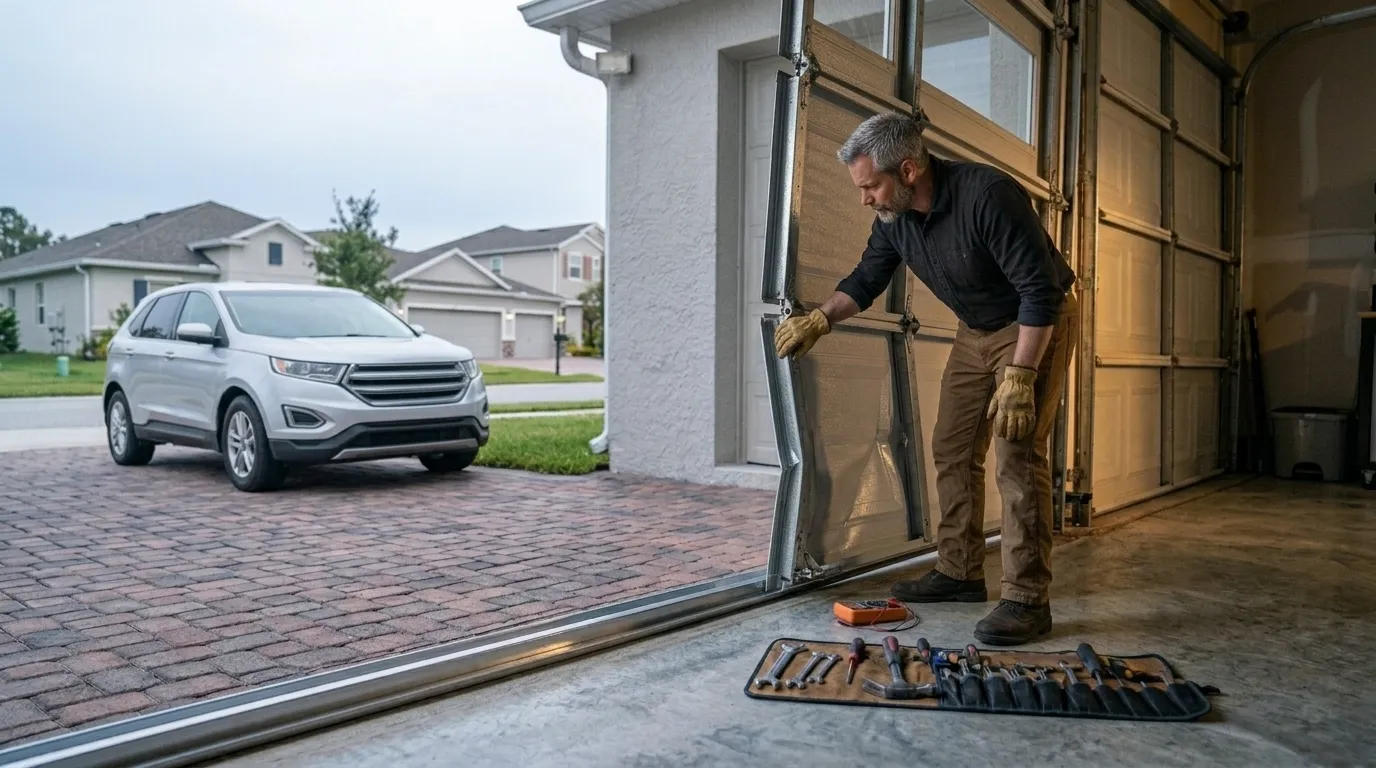
Most of the trouble with an off-track door in Catlettsburg isn't the track itself - it's what's bolted to it. Homes here run older than the typical house across the wider service area, with a median build year of 1956, well ahead of the 1970 median for the six areas we cover out of Ashland.
That fourteen-year gap matters because track brackets, jamb hardware, and the wood framing they're screwed into have had more decades to work loose, rust, or shift with the house settling.
On a door that age, one bent roller or a jamb bracket that's pulled half an inch out of square is often enough to walk a panel off the track on the next cold morning.
We've found that fixing the symptom without checking the bracket underneath just means a return call in a few weeks. The fix has to account for what's holding the track, not just the track.
Job timing
We run this call from Ashland, about 4 miles out, so there's no separate crew or depot in Catlettsburg - it's the same truck and the same tech who'd take an off-track call anywhere else we cover. What changes job to job here isn't the drive, it's the door. A single-car door off its track on a 1956-built house usually means older, lighter-gauge track that's already flexed once or twice before; a door added or replaced later in the same neighborhood might be on newer rail that's just been knocked loose by a slipped cable.
We don't guess which one we're walking into until we're standing in front of it. That's normal for this kind of call - off-track work is diagnosis-heavy, not a swap-a-part job, and rushing the look-over is how a door ends up back off the track a second time.
The repair
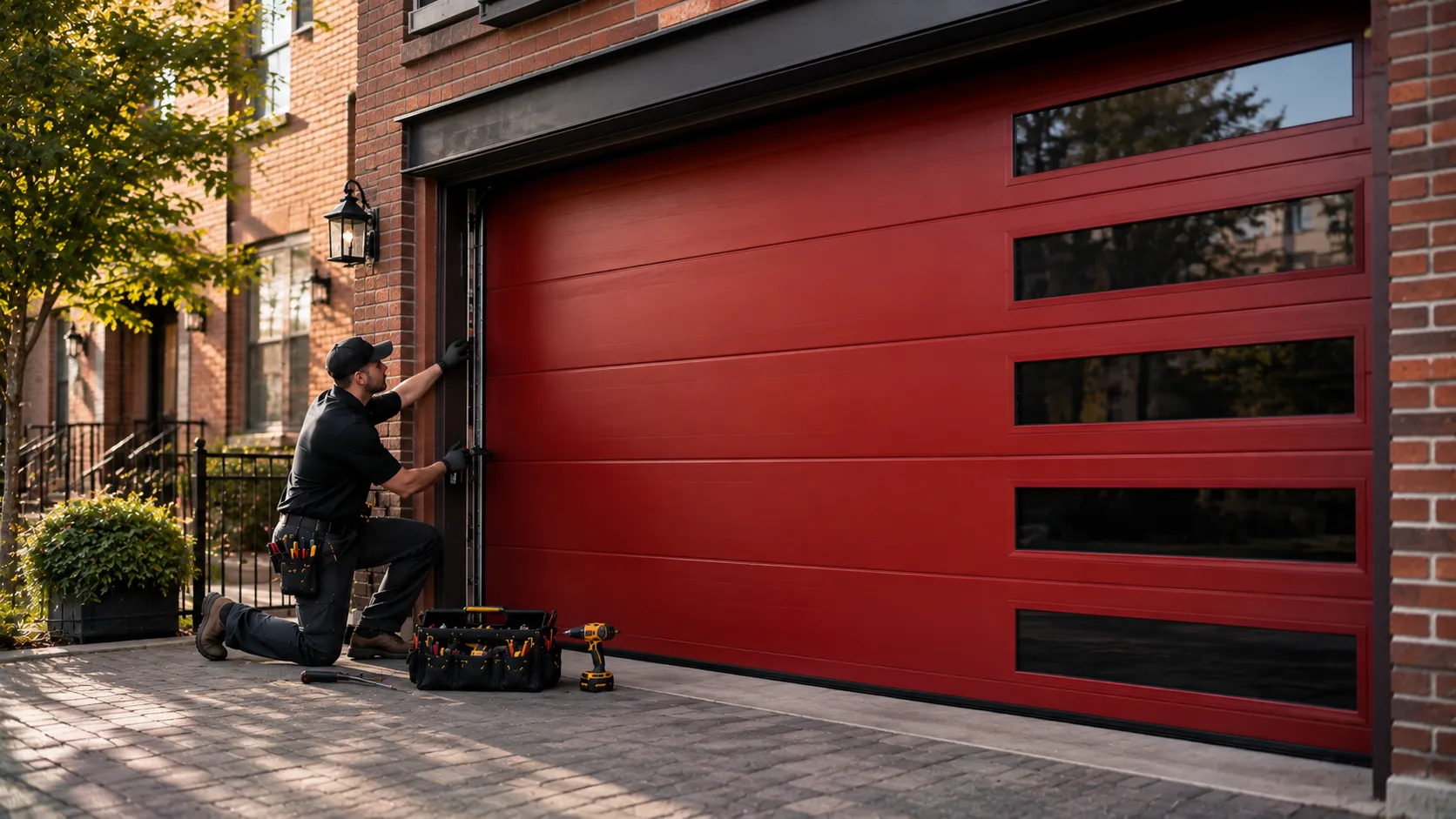
Getting a door back on track starts with figuring out why it left in the first place, not just lifting it back into the rail.
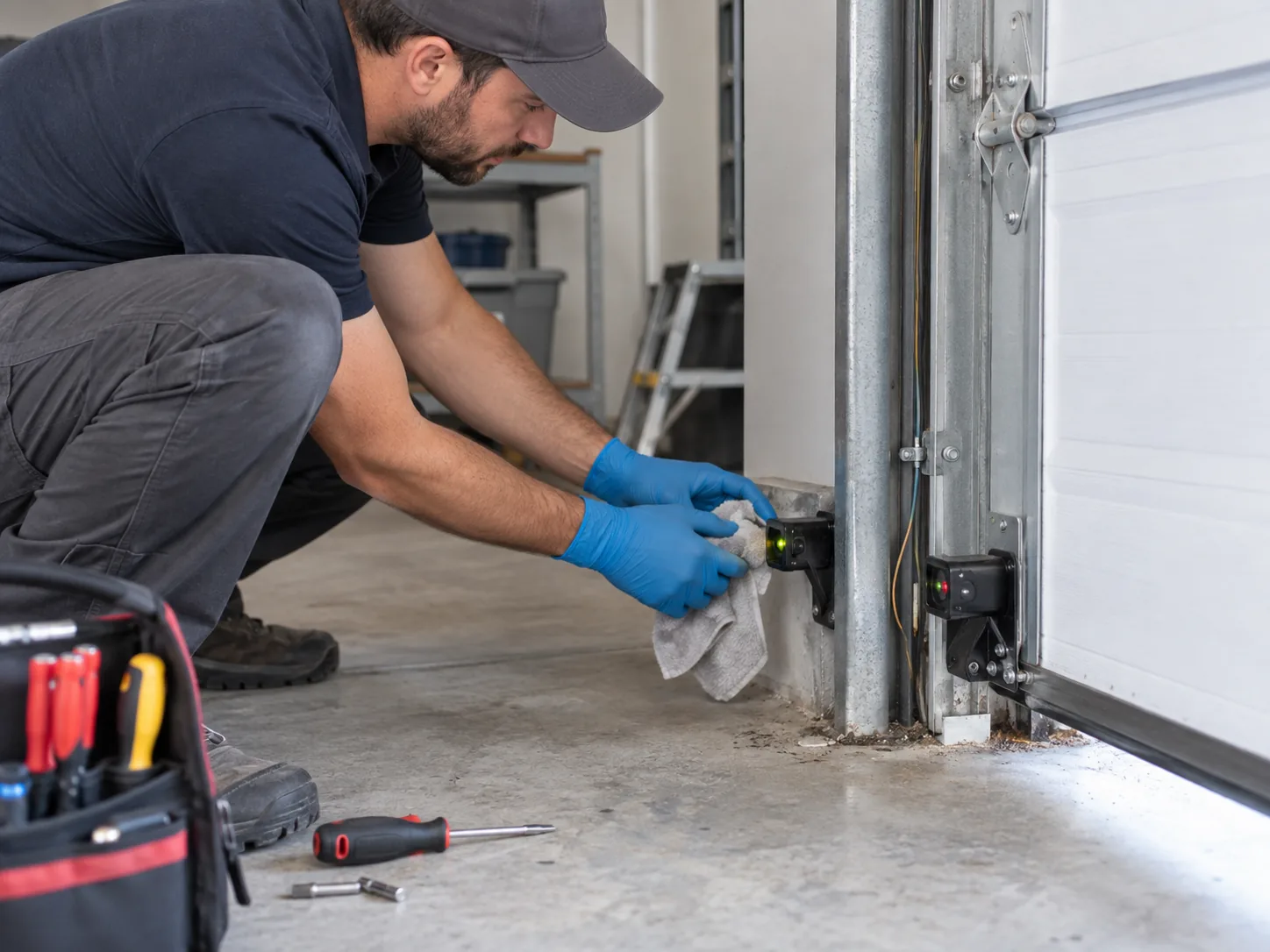
On older track sections common to Catlettsburg's 1956-median housing, we're checking for bent rail, worn rollers that have chewed the inside edge of the track, and loose or rusted jamb brackets - any one of which will push a panel off again within days if it's ignored.
Once the cause is clear, the work is roller replacement or track realignment, re-securing brackets into solid framing, and running the door through a full cycle to confirm it's tracking straight top to bottom.
If the track itself is bent badly enough - which happens more on original hardware than on anything installed in the last twenty years - replacing that section beats trying to hammer it straight. We'll tell you which one you're looking at before we start, not after.
Symptoms
The door either jumps the track partway up, drags and binds on one side, or comes to a full stop with a panel visibly cocked out of the rail. Sometimes it's sudden - a cable lets go and the door drops crooked - and sometimes it's gradual, a door that's been running rough for weeks before it finally leaves the track on a cold morning.
Either way, the door shouldn't be forced by hand or run again on the opener once it's off. Forcing it usually bends the track further or pulls a roller clean out of its bracket, which turns a one-visit fix into a track and hardware replacement.
Local causes
This area sits in a cold-climate band with real winter severity, and that's part of what stresses track hardware built into 1956-era garage framing. Temperature swings make steel rail contract and expand, and on brackets that have already loosened over sixty-plus years, that movement is enough to walk a bracket a little further out each winter until a roller finally jumps clear.
Across the wider area we cover - 8,714 households and 5,008 owner-occupied houses, most from the 1960s-70s build wave - Catlettsburg's housing runs a bit older than that average, so we tend to see this fault here more from aged hardware than from a single storm event. It's less dramatic than a tree branch through a panel, but it's more common, and it's the kind of thing that's cheaper to catch at the loose-bracket stage than after the door's actually left the rail.
Questions
No. A snapped cable is one cause, but on older Catlettsburg homes we just as often find a bent roller, a loose jamb bracket, or rail that's flexed out of alignment over the decades. The symptom looks similar - a crooked or stuck door - so we check all three before assuming it's the cable.
Don't force it. Pushing a panel back into a bent or misaligned track usually bends it worse or pulls a roller out of its bracket entirely, turning a same-visit repair into a track replacement. Leave it where it stopped and get it looked at.
No, we run this call from Ashland, about 4 miles away. There's no separate branch here - it's the same truck and tech covering the drive, so response depends on scheduling out of Ashland rather than a local depot.
Catlettsburg's homes have a median build year around 1956, older than much of the surrounding area. Track brackets and framing have had more decades to loosen, rust, or shift with the house settling, which makes an off-track fault more likely than on a newer install.
Explore more
Ready when you are
Ashland Garage Door Pros repairs and installs garage doors, springs and openers in Ashland, KY and the surrounding area.