
Catlettsburg distance considerations
That's different from the outer parts of our service area, where a call to Grayson at eighteen miles means we plan the route around it. Catlettsburg is one of the easy ones geographically.
Catlettsburg, Ashland
Garage door repair for Catlettsburg's 1950s housing stock, covered from our Ashland shop four miles up the road. Springs, openers, and cold-weather fixes.
Watch-outs
Catlettsburg is a short trip from our shop in Ashland - about four miles - which matters more than it sounds like it should. On a call that close, we're not burning half the job on the road, so if a spring lets go on a Tuesday morning, we can usually get a truck there and back without the drive eating the appointment.
That's different from the outer parts of our service area, where a call to Grayson at eighteen miles means we plan the route around it. Catlettsburg is one of the easy ones geographically.
The complication here isn't the drive, it's what's waiting at the end of it: a lot of these houses have a door and opener setup nobody's touched since the Carter administration, because nobody local specializes in it and the big-box installers don't carry the parts.
We do carry them, but we still have to bring them with us - there's no walk-in counter in Catlettsburg itself, so what's on the truck when we leave Ashland is what we've got for that visit. If a part turns out to be unusual, that can mean a second trip.
Job timing
A straightforward spring or cable replacement on a Catlettsburg door usually runs like it would anywhere else once we're on site - an hour, sometimes less. What changes the timeline is the hardware age. On a door original to a house built around 1956, we're often dealing with a track profile or a bracket pattern that isn't what ships on a new door kit, so there's more adjusting and less bolting-straight-on than a newer install. We budget extra time for that rather than guess and come back. If the opener is original too, expect us to spend a few minutes just figuring out what we're working with before we start pulling anything apart - these units weren't all wired or mounted the same way, and there's no shop manual for a 1960s chain drive that somebody's grandfather installed himself.
The repair
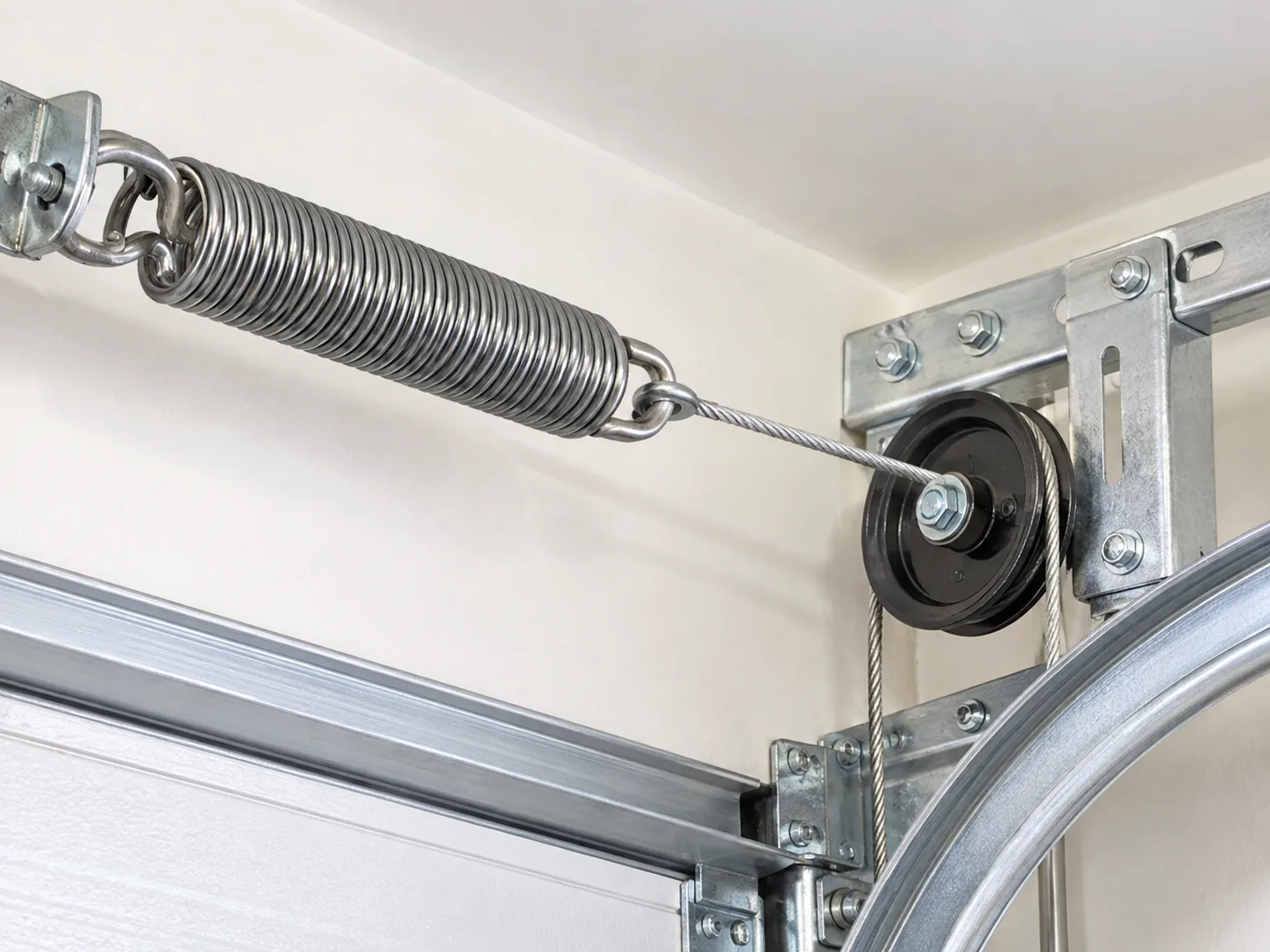
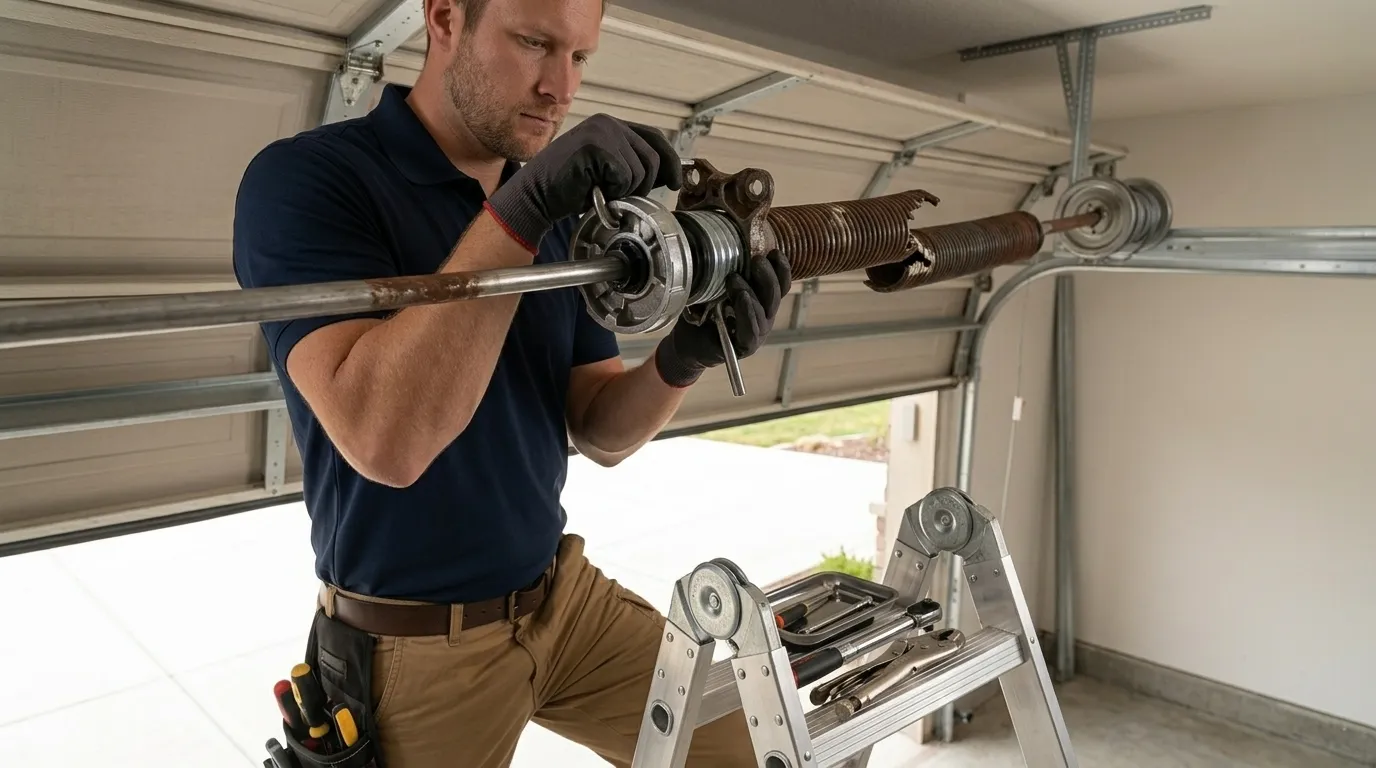
Most Catlettsburg calls fall into one of three buckets: a broken torsion or extension spring, a cable that's frayed through, or an opener that's stopped talking to the wall switch.
On the older one-piece and sectional doors common to this part of town, the fix often means matching spring wire size and wind direction to hardware that predates the standard sizing charts - we measure rather than assume.
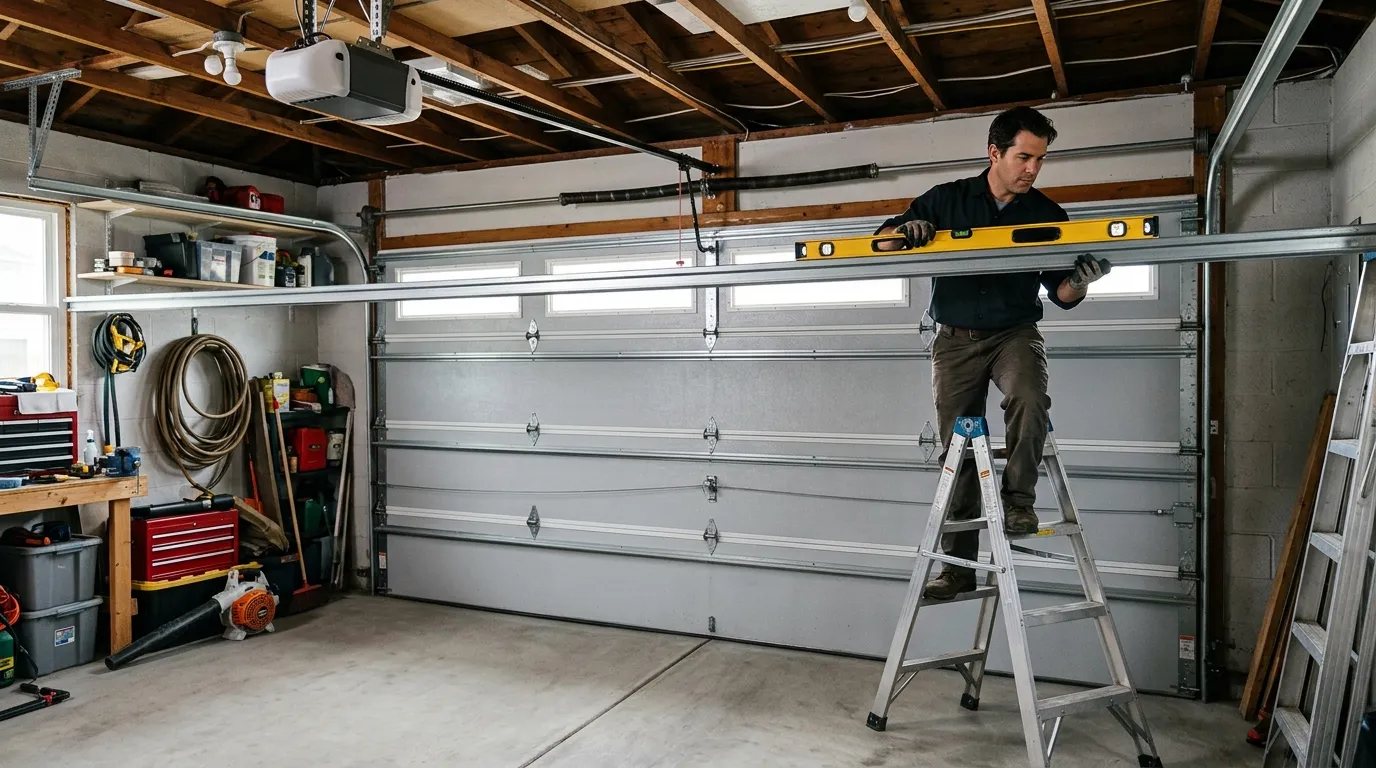
Where the track has widened or the rollers have worn oval from decades of use, we replace the worn run rather than patch it, since a bent or loose track on a heavy door is a safety problem, not a cosmetic one.
One honest limit: if the door itself has delaminated or the panels have rusted through at the bottom, we'll tell you straight that a repair is a short-term patch and replacement is the better money, rather than charge you twice for the same door.
Symptoms
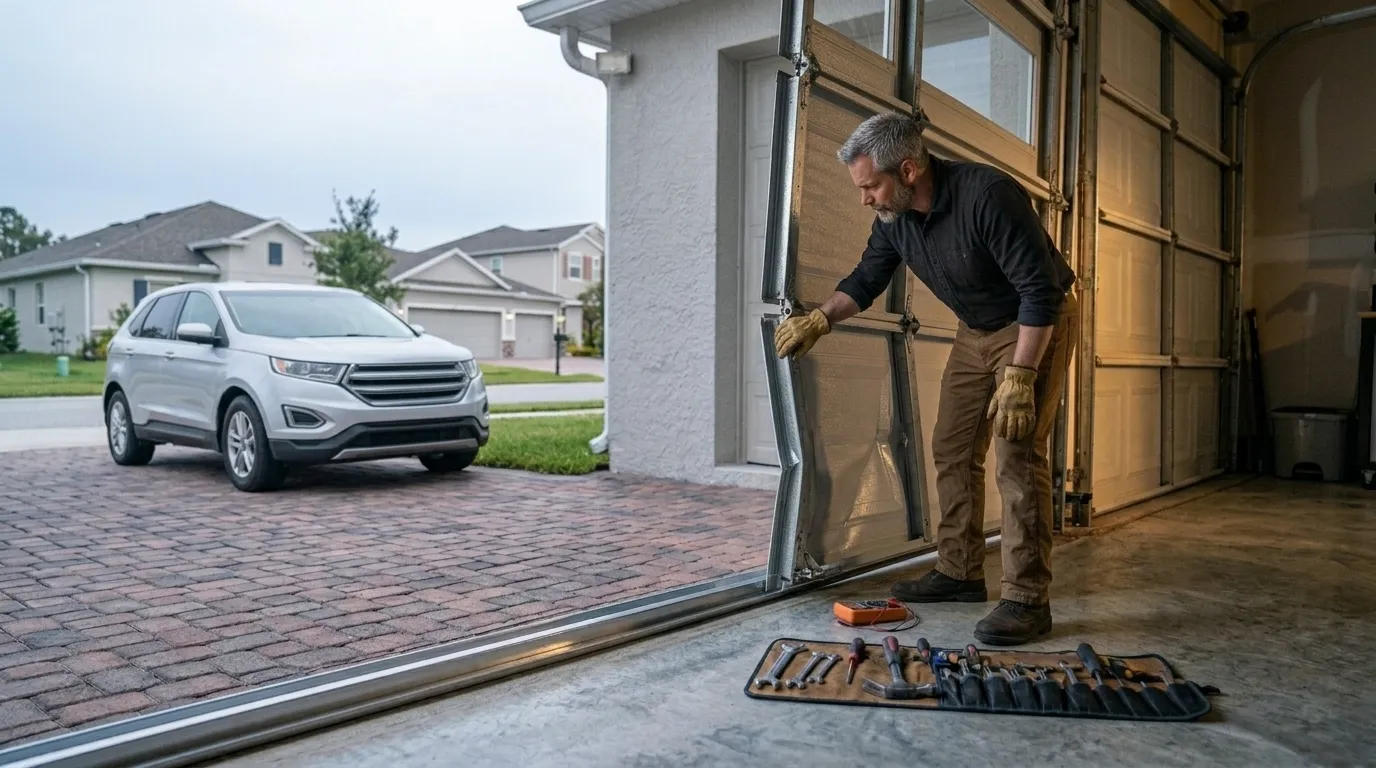
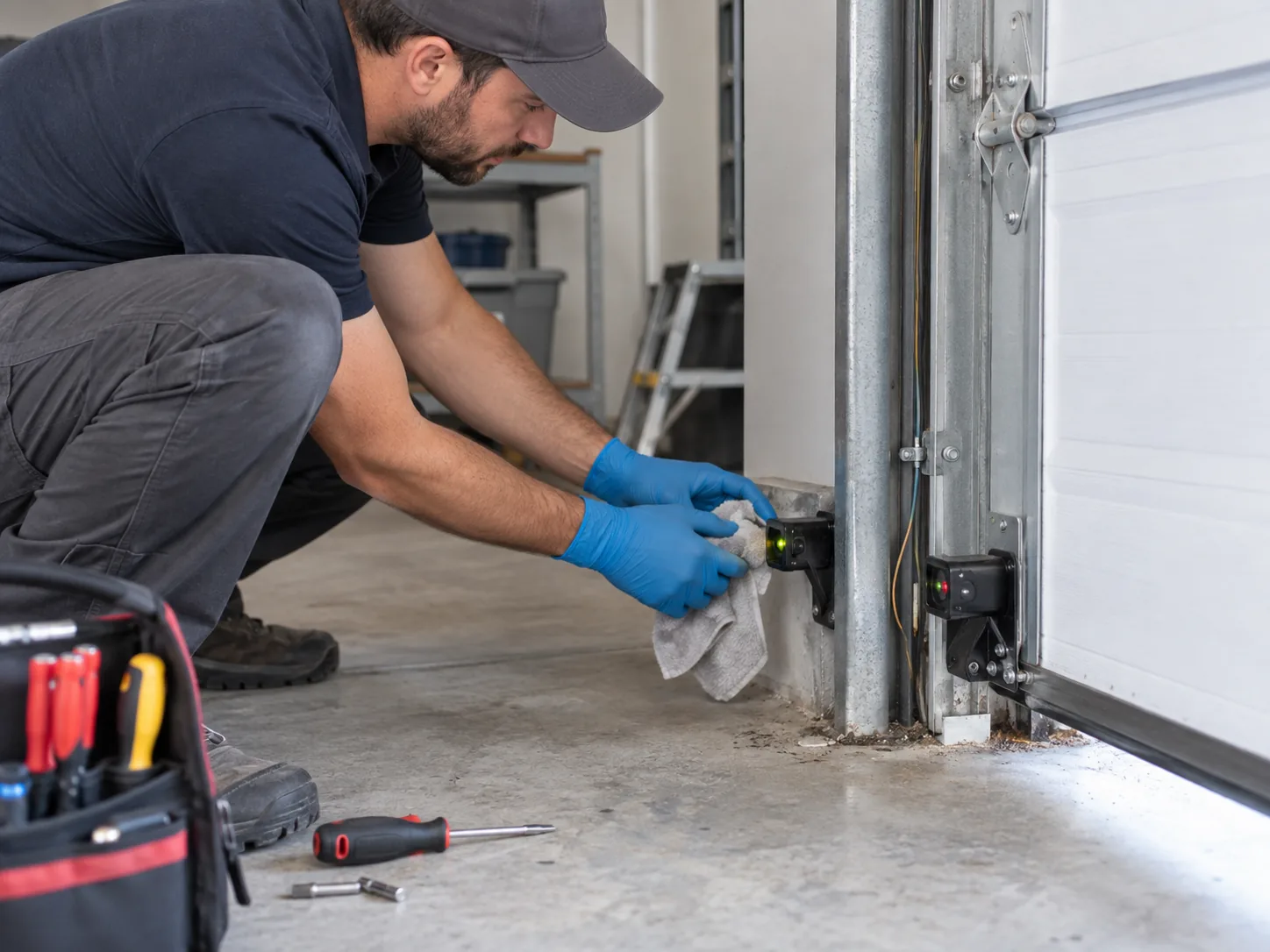
The call we get most from this side of the river is a door that won't budge, paired with a loud bang that happened first - that's a torsion spring letting go, and on a door this age it's almost always the original spring, decades past when it should've been swapped. Close behind that: an opener that runs but the door barely lifts, which is usually a spring that's weakened rather than snapped, forcing the motor to do a job it wasn't built to do alone. We also see a fair number of doors that reverse or won't close all the way - often a photo-eye sensor that's been knocked out of alignment, or a slack cable riding off its drum. None of these are exotic problems. They're what happens to hardware from the Nixon-to-Carter era that's still doing daily work.
Local causes
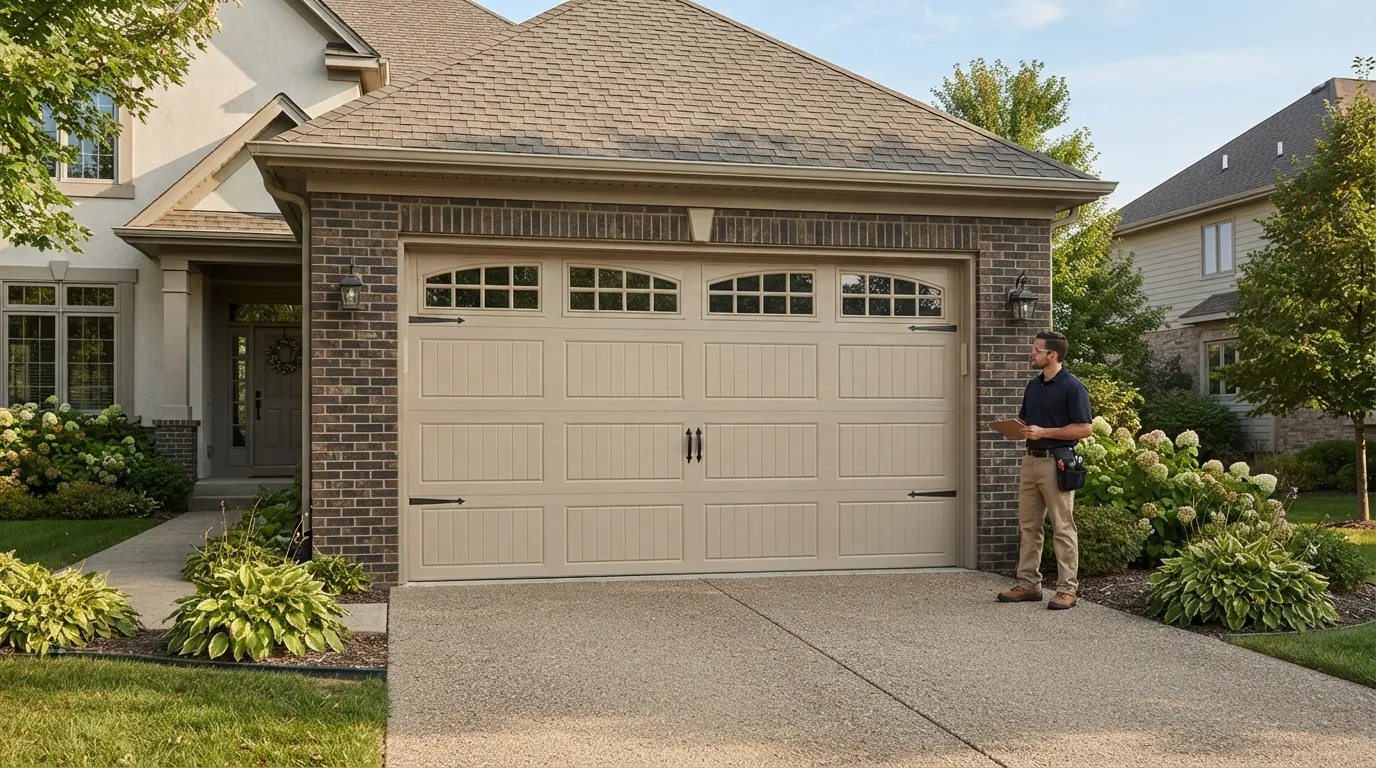
The housing stock is the whole story. Catlettsburg's homes carry a median year built of 1956, older than the wider service area's 1970 median, which means more original torsion hardware, more painted-shut tracks, and more openers installed before garage door safety standards required auto-reverse sensors. Add in a COLD-band winter - hard freezes that stiffen grease, shrink metal, and put extra load on a spring that's already fatigued - and older systems here fail sooner than a comparable door in a newer subdivision would. Income plays a role too: at a median household income of $34,524, well under the wider area's $53,046, replacement often gets put off past the point a spring or cable was really safe to keep running, which is part of why we see more full-failure calls than slow-warning ones. It's not negligence - it's a door doing thirty years more work than it was built for.
Questions
About four miles from Ashland, which is close enough that we don't need to build extra drive time into most appointments. It's one of the shorter trips in our service area, so same-day scheduling is usually easier here than for the farther towns like Greenup or Grayson.
The housing here dates to a median year of 1956, older than most of the surrounding area. Original torsion springs from that era are decades past their expected cycle life, so by the time we're called, the spring is usually failed or close to it rather than just squeaky.
We stock common spring sizes and standard opener parts on the truck, but an unusual 1960s-era unit sometimes needs a part we don't carry that day. We'll tell you on site if that's the case rather than guess, and we'll come back once we have it.
Depends on the damage. A worn spring, cable, or track is almost always worth fixing. A door with rusted-through panels or delaminated wood is a different call - we'll say so plainly if replacement is the better money instead of charging for a patch that won't hold.
Explore more
Ready when you are
Ashland Garage Door Pros repairs and installs garage doors, springs and openers in Ashland, KY and the surrounding area.