
Dominant 1973 era
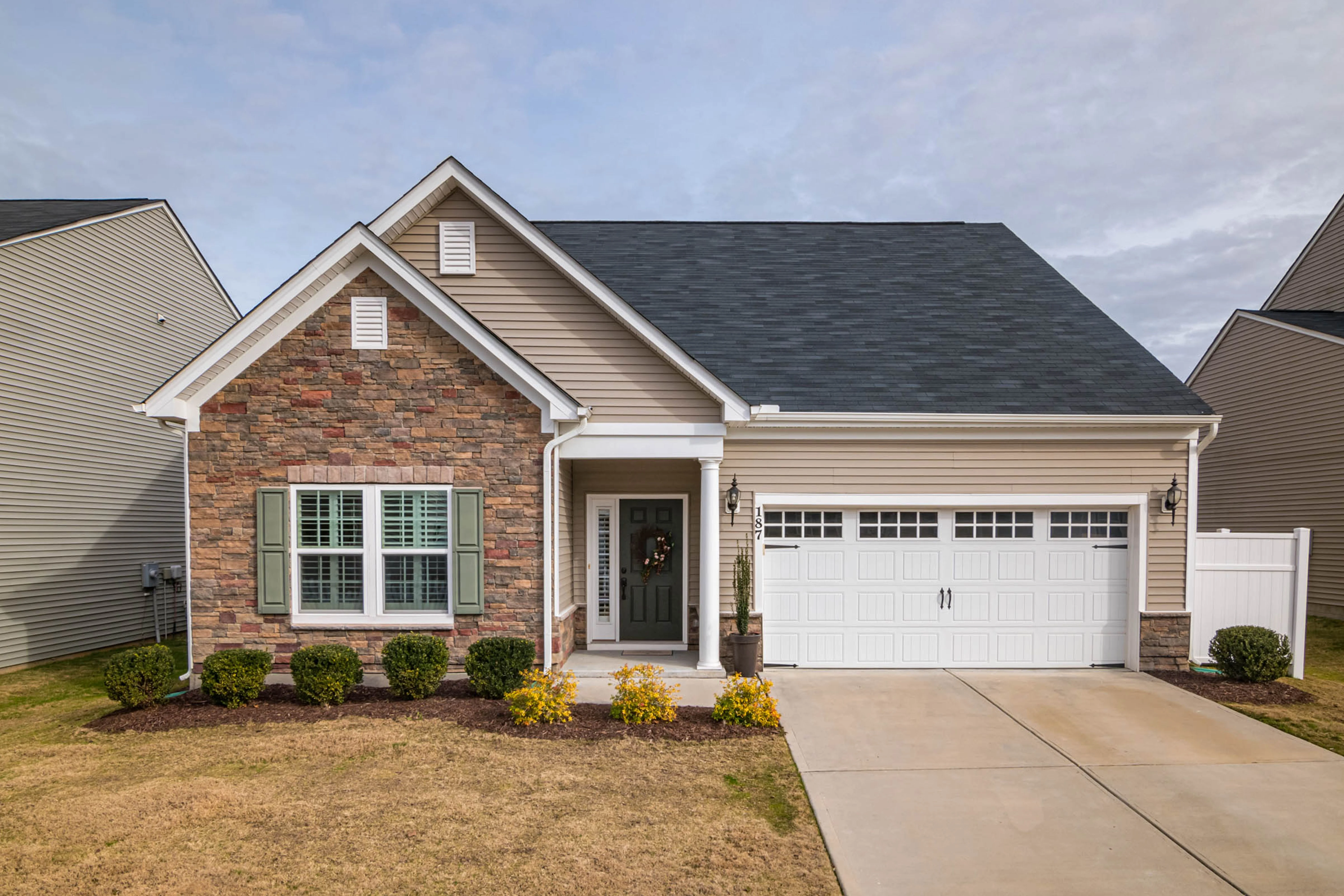
It has one dominant era: the typical Westwood house went up around 1973, squarely inside the 1956-1979 window that produced most of the doors on this side of the county.
Westwood, Ashland
Westwood, KY has 1,779 households and houses built mostly around 1973. We work on the torsion-spring doors and hardware that era left behind, from our Ashland shop 2 miles away.
Watch-outs
Westwood is small - 1,779 households, not a sprawling grid of subdivisions. That matters for the kind of calls we get here. A town this size doesn't have five different eras of housing stock competing for parts on the truck.
It has one dominant era: the typical Westwood house went up around 1973, squarely inside the 1956-1979 window that produced most of the doors on this side of the county.
That means fewer surprises but a narrower band of hardware to know cold - torsion springs sized for steel sectional doors, older extension-spring setups on the odd garage that never got upgraded, and openers that have usually been swapped out once or twice since the house was built. The complication isn't variety, it's age.
A door that's stood for fifty winters doesn't fail the way a five-year-old door fails. Cables fray at the drum instead of snapping clean. Rollers seize in tracks that were never galvanized to today's spec. We see the same handful of failure patterns over and over in Westwood because the houses were mostly built in the same handful of years.
Booking
Westwood sits about 2 miles from our Ashland shop, which puts it near the front of most days' routes rather than at the end of them. We don't run a branch or a depot in Westwood - every job here is a truck coming out from Ashland - but the short distance means it's rarely the reason a job gets pushed. Booking works the same as anywhere else we cover: tell us what the door is doing (or not doing), give us the make if you know it, and we'll get a truck stocked for the likely fix before it leaves. If you want the full rundown of what we cover across the area, that's on the main Ashland service page; this page is just about the Westwood side of the work. See the Westwood page for more on the neighborhood-specific side of things.
On the truck
Because Westwood's housing stock and the wider service area's stock point to the same construction decades, we stock toward that era rather than guessing.
Torsion springs wound for the door sizes and cycle counts common to early-1970s garages are the parts most likely to be on the truck when we're headed to Westwood. Same goes for drums, cables, and the specific roller styles that turn up on doors that haven't been touched since the Carter administration.
What we don't always carry is the exact original hardware for a door that's never been serviced - some of those parts simply aren't made anymore, and matching an obsolete track profile can mean a short wait on an order rather than a same-visit fix. We'll tell you straight if that's the situation instead of jury-rigging something that won't hold.
Local causes
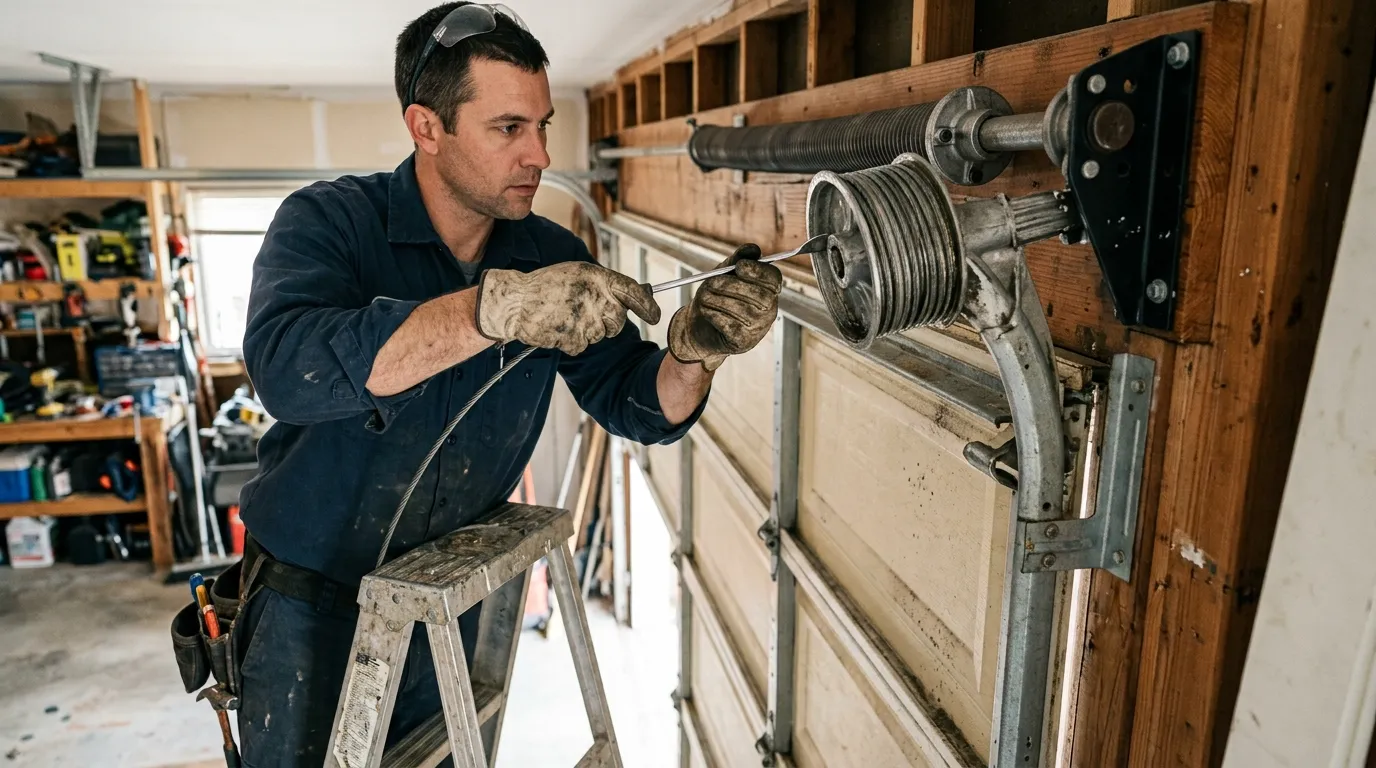
Two things stack on top of each other in Westwood: age and cold. The climate band covering this area is severe cold, and steel torsion springs lose tension faster in that kind of swing between summer heat and hard winter freezes than they do in milder regions. Pair that with a door that's likely close to fifty years old - median construction here lands around 1973 - and you get springs that are not just old, they're old and cycled through decades of temperature stress most manufacturers never designed for. That's the common thread behind a lot of the calls: not one dramatic event, just cumulative fatigue in metal that was never meant to run this long. Openers fail for more ordinary reasons - worn gears, dying capacitors - but the spring and hardware side of the job in Westwood is almost always a story about age plus cold, not a story about damage.
Symptoms
The complaint we hear most from Westwood is a door that closes unevenly - one side dropping faster than the other, or the whole panel racking slightly as it comes down.
On a house built in the early '70s, that's usually a spring losing tension unevenly rather than a track knocked out of alignment, though it can be both at once if the door's original hardware was never adjusted over the years.
A second common symptom is a door that opens fine but reverses partway through closing; on older openers paired with heavier, older-style steel doors, that's often a sensor or force-setting issue rather than anything structural.
Neither symptom means the door is done - but neither should be left running for months either, since a spring that's failing unevenly puts uneven load on the opener and the tracks, and that's how a $150 spring job turns into a $600 track-and-opener job.
DIY or pro
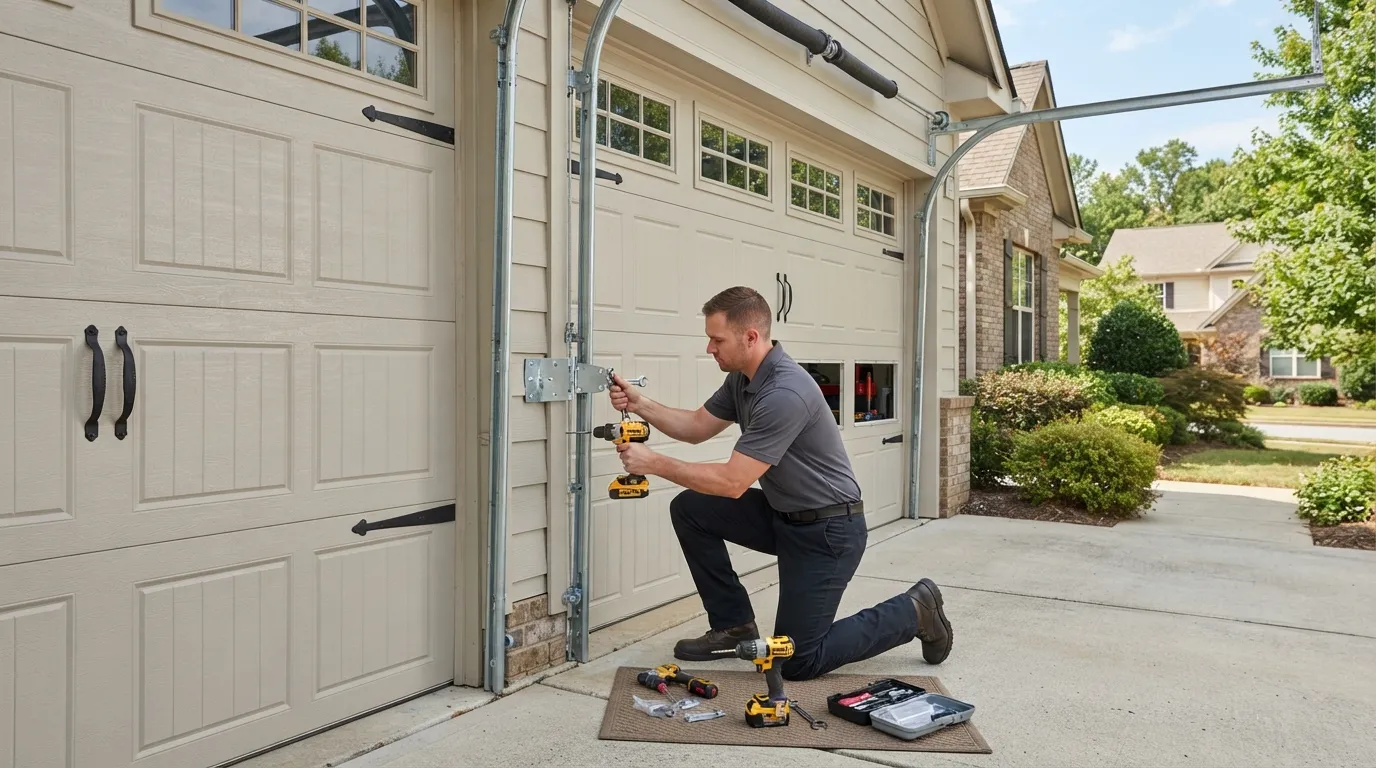
There's real DIY territory here - tightening loose hardware, lubricating rollers and hinges, clearing debris from tracks, replacing weatherstripping. All of that is safe and worth doing yourself if you're comfortable on a ladder.
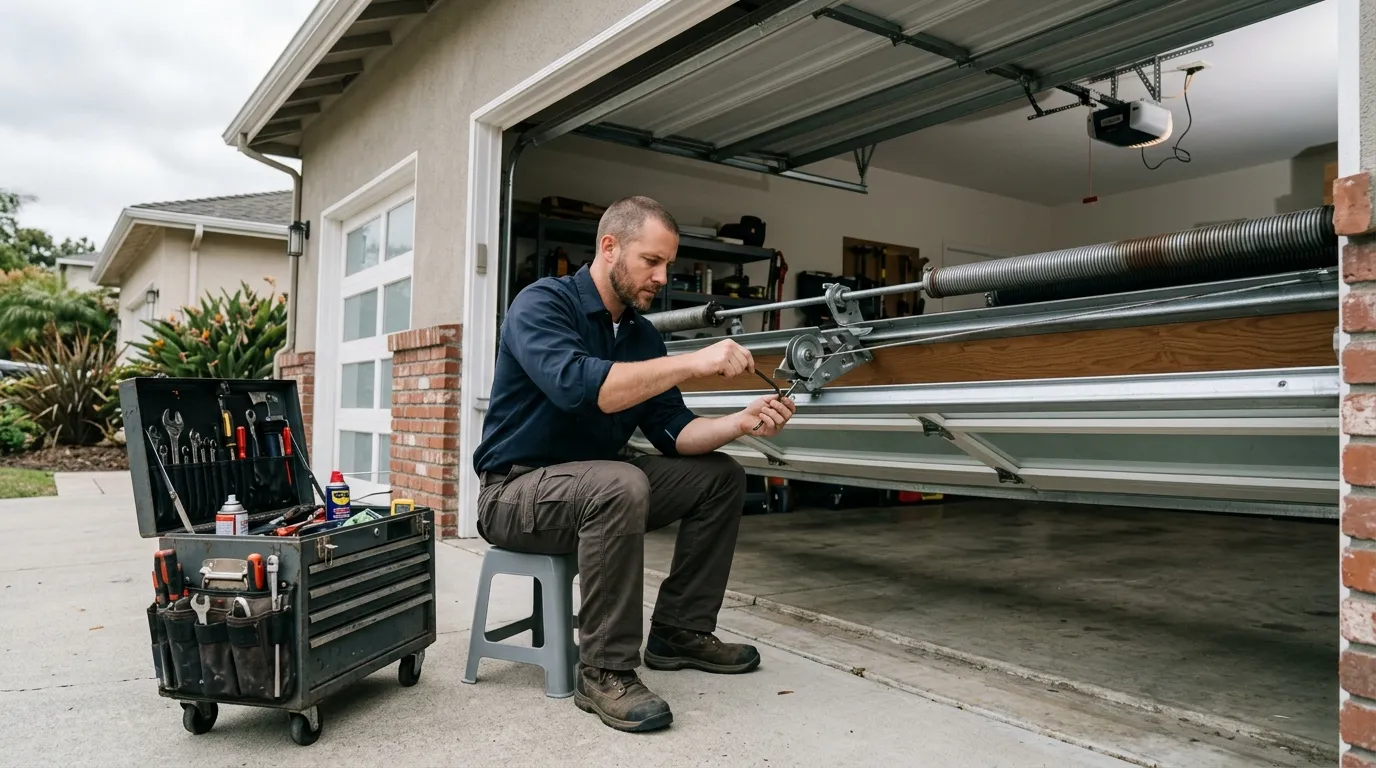
What isn't DIY territory is the torsion spring itself. A wound torsion spring on a door this age holds enough stored force to break a wrist or worse if the winding bars slip, and on hardware that's fifty years old, corrosion and fatigue make that slip more likely, not less.
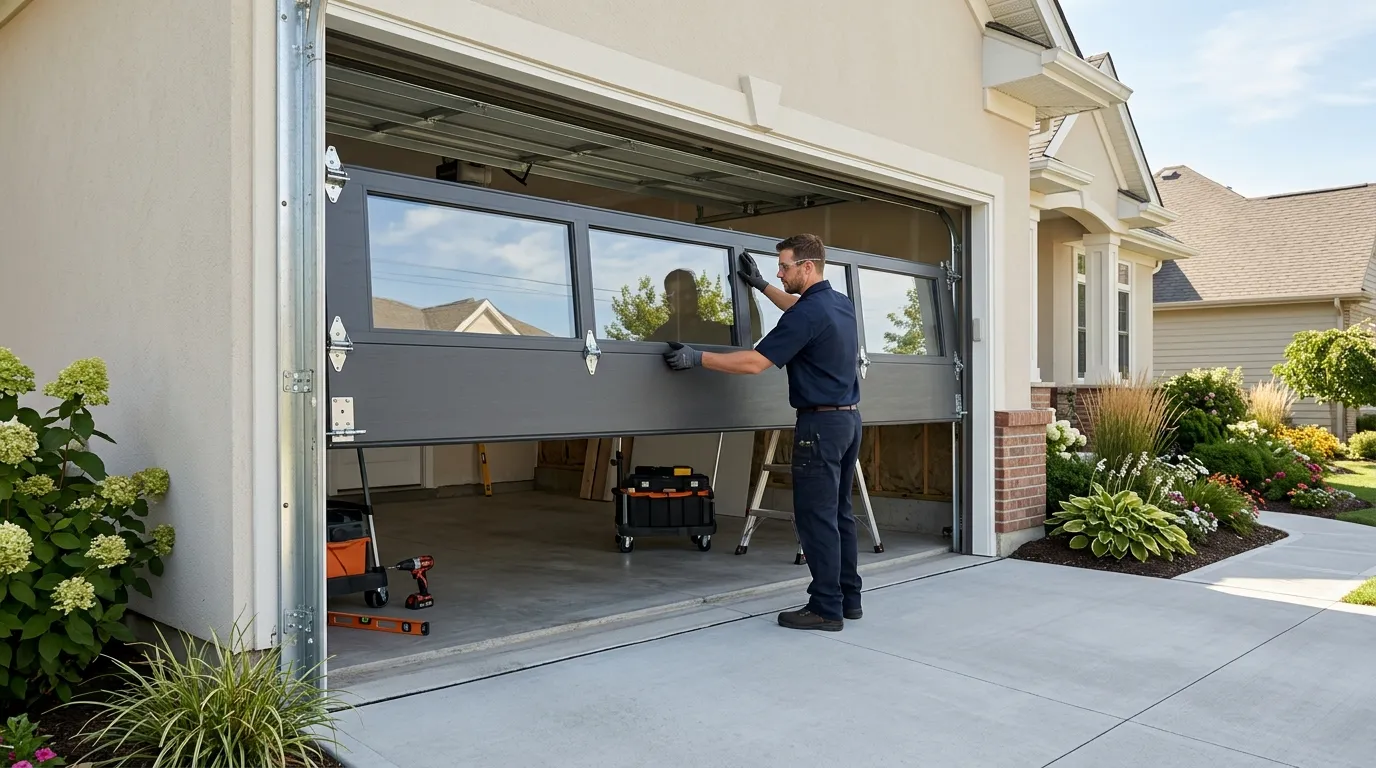
We'll also say plainly: if a door's tracks, hinges, and springs are all failing around the same time, patching each one separately usually costs more in the long run than replacing the door.
We won't push a full replacement on a door that just needs a spring, but we won't talk you into another round of patchwork on one that's genuinely done, either.
Questions
About 2 miles. We don't keep a branch or depot in Westwood - every job comes from our Ashland shop - but the short distance means it's rarely a scheduling problem, and it's usually one of the closer stops on a day's route.
Most houses in Westwood were built around 1973, in the same construction window that produced most of the area's housing stock. That means a lot of doors are running original or near-original torsion springs that have now cycled through fifty winters of severe-cold stress, which is exactly the kind of wear that causes uneven tension and failure.
We'd say no. A wound torsion spring holds enough force to cause a serious injury if it slips while you're adjusting it, and on hardware this old, corrosion makes that more likely. Lubricating rollers or tightening hardware is fine to do yourself; the spring itself isn't a safe DIY job.
For the common stuff - torsion springs, cables, drums, rollers sized for the door styles common to 1960s-70s construction - yes, that's what we stock toward. Original hardware for a door that's never been serviced can sometimes mean a short order wait if the exact part isn't made anymore.
Explore more
Ready when you are
Ashland Garage Door Pros repairs and installs garage doors, springs and openers in Ashland, KY and the surrounding area.