
1973 centered housing stock
What actually complicates a job in Westwood isn't the distance, it's the door. Houses here cluster around 1973, right in the middle of the broader 1956-1979 build-out across this service area.
Westwood, Ashland
Westwood sits just 2 miles from Ashland, with most houses built around 1973. That means torsion hardware and panel styles our trucks carry stock for.
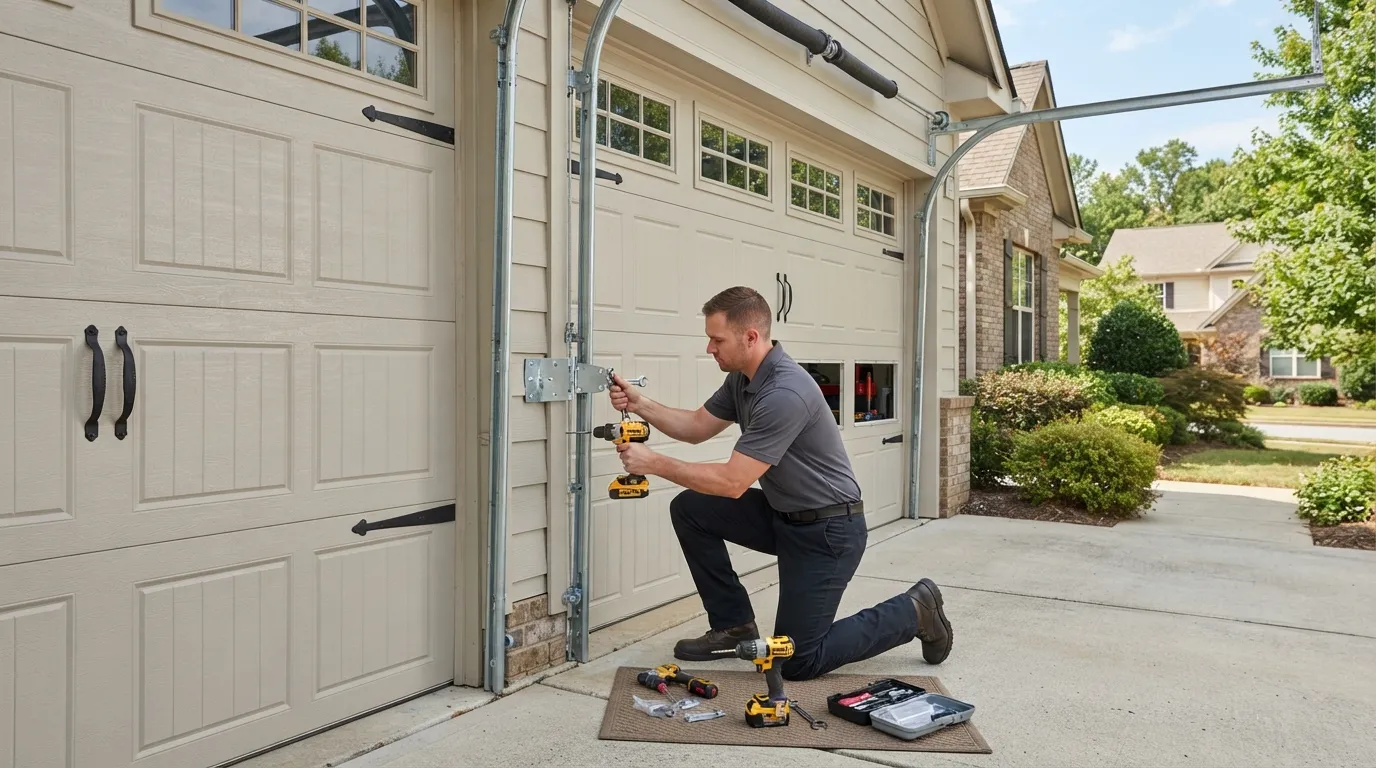
Watch-outs
Westwood is about as close to Ashland as this service area gets - 2 miles, a straight shot. That short drive matters less for how fast we show up and more for what it means logistically: a tech can swing back to the truck for a part without burning the whole afternoon, which changes how we quote same-day work here versus towns further out like Grayson.
What actually complicates a job in Westwood isn't the distance, it's the door. Houses here cluster around 1973, right in the middle of the broader 1956-1979 build-out across this service area.
That era means torsion springs wound to specs nobody's made in twenty years, and steel sectional doors hung on hardware that was standard then and obsolete now. A tech who shows up expecting a 2010s door and finds 1970s track brackets is going to need the right part on the truck, not a guess.
Westwood's smaller than some of the towns we cover - around 1,779 households - so there's less volume to justify pre-stocking every odd bracket size. We carry what the era demands instead of what's common everywhere.
Booking
There's no branch office in Westwood - every job here is a truck coming from Ashland, same as the rest of this service area. The 2-mile drive means that leg of the trip isn't what determines your window; parts and the order of the day's other calls are. If you're calling about a door that won't close and it's blocking a car in, say so - that's a different priority than a noisy opener that still works.
Westwood households run a bit higher on income than the service-area median - around $70,012 versus $53,046 across the wider area - and in practice that shows up less in how fast we book and more in what people ask for once we're there: replacement quotes alongside the repair, insulated panels instead of patching a 50-year-old steel skin. We'll always give you the repair option first if the door's worth saving.
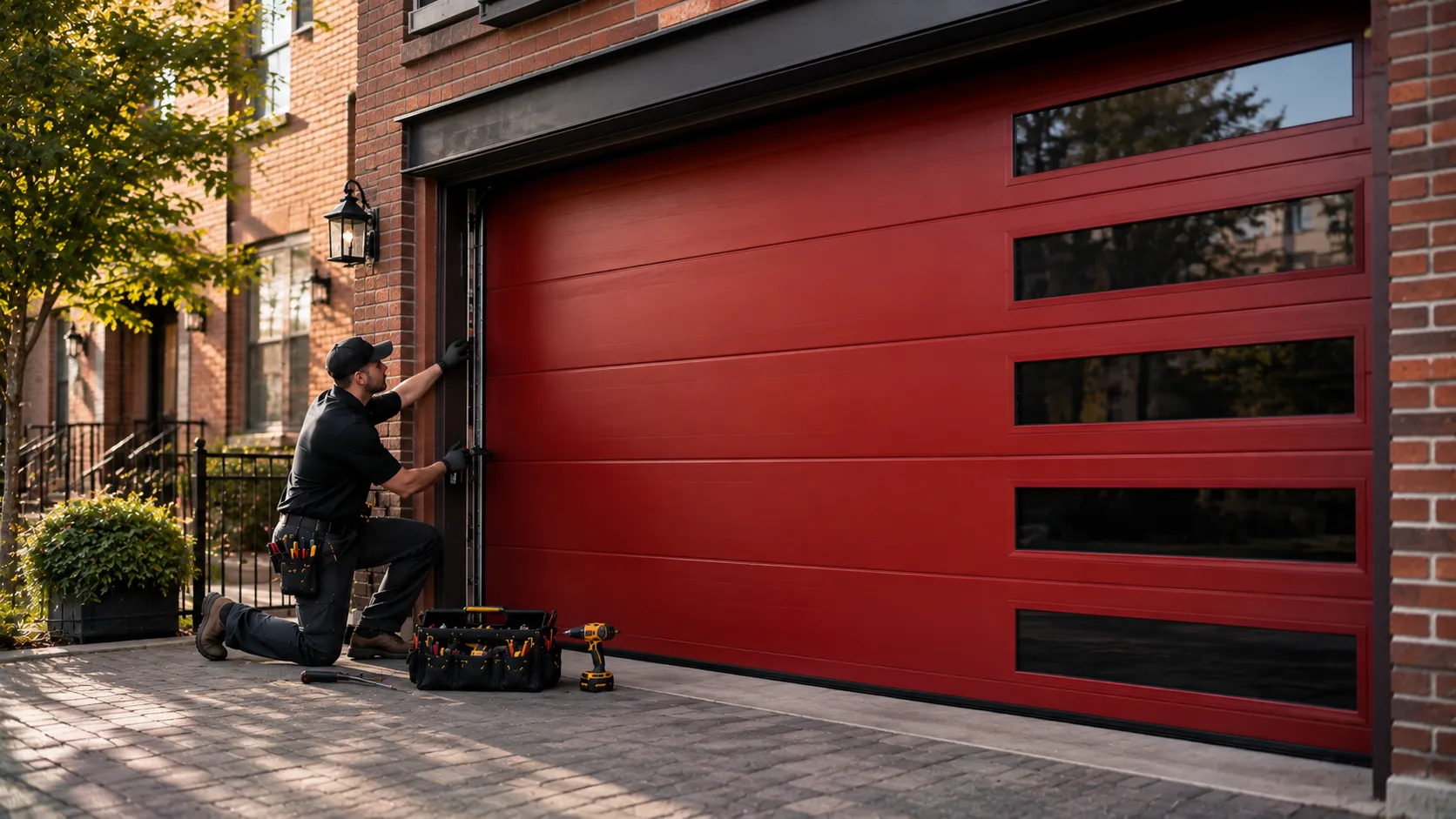
On the truck
With most Westwood houses dating to right around 1973, the doors we run into are mid-century steel sectional units on side-mounted torsion springs, sometimes still on the original tracks.
That's consistent with the 1956-1979 window that describes most of this service area's housing - Westwood just sits close to the middle of it. We stock torsion springs sized for that era's door weights and the extension-spring conversions some owners had done later when the originals failed.
Rollers and end bearings from that period wear a specific way - the steel rollers in particular grind themselves oval over decades, not just years - so we carry nylon replacements sized for those old brackets rather than assuming a universal fit. What we don't stock: proprietary opener boards for defunct brands.
If your door has one of those and it fails, we'll tell you straight that we're ordering a part, not swapping it same-visit. That's the one honest gap - we'd rather say it up front than promise a fix we can't deliver that day.
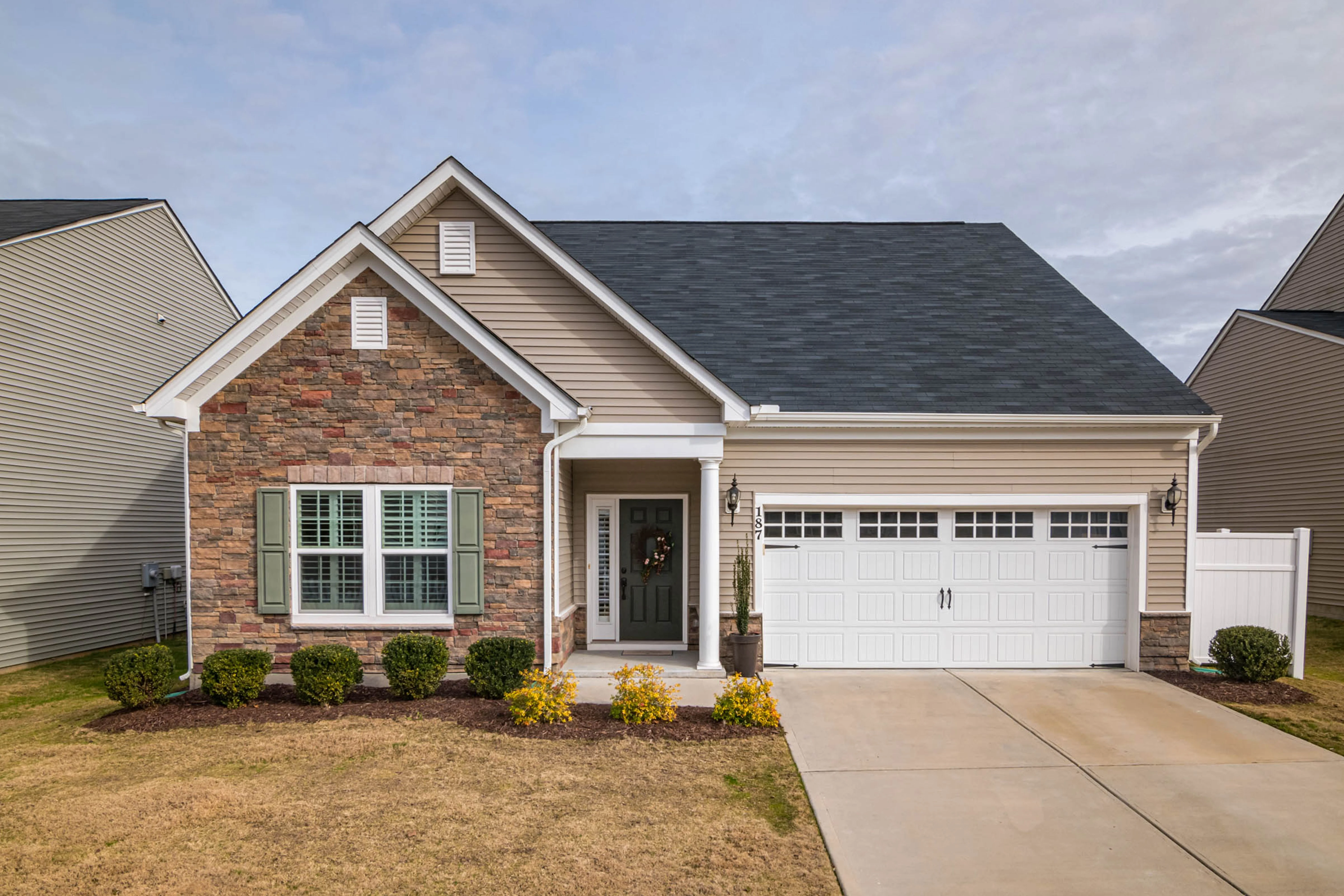
Local causes
This area sits in a cold-climate band with severe winters, and that's the biggest single driver of spring failure on doors of Westwood's age. A torsion spring that's been cycling for close to fifty years loses temper faster once it's also contracting and expanding through hard freezes every winter - the metal fatigues from both the cycles and the cold, and one more January morning is what finally snaps it.
The second driver is simpler: age plus moisture. Doors built around 1973 predate a lot of the galvanizing improvements that came later, so track brackets and hinges on original hardware corrode from the inside of the mounting holes out. You don't see it until the track pulls loose under load.
We don't have local weather-event data specific enough to tie a repair spike to a particular storm, so we won't claim one. What we can say is that the two factors above - 1970s-era hardware and a genuinely cold climate - show up together on almost every torsion spring call we run in Westwood.
Symptoms
The complaint we hear most from Westwood is the door that starts to close, hesitates about a foot down, and either reverses on its own or grinds and stalls.
On a door this age, that's almost always a spring that's lost enough tension that the opener is trying to lift more weight than it's rated for - the opener isn't broken, the spring is. A second common one: the door opens fine but sags visibly on one side once it's up, sometimes with a faint scraping sound from the track.
That's usually a cable that's stretched or frayed unevenly, which happens on original hardware once the galvanized coating has worn through and rust has pitted the strand. Both of these get worse with each cycle, not better.
If your door is doing either one, that's not a lubricate-and-wait situation - running it more times on a fatigued spring or a fraying cable is how the cable snaps under load, and a door under tension coming down uncontrolled is the actual safety issue here, not just the inconvenience.

DIY or pro
Lubricating rollers and hinges, cleaning the track, and tightening loose hardware on the door itself are all fine to do yourself and worth doing every few months on a door this old regardless. WD-40 isn't the right lubricant for this - a garage door lithium or silicone spray holds up better in cold weather.
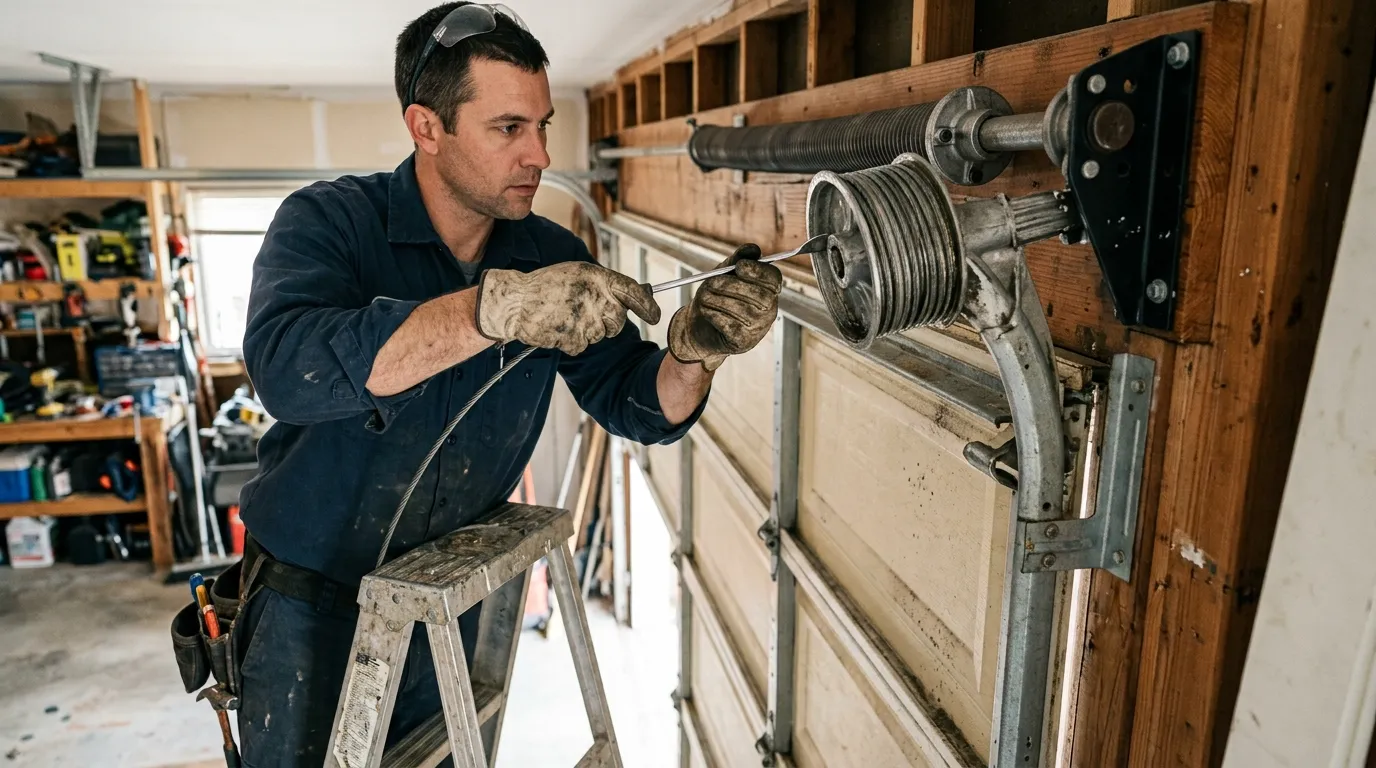
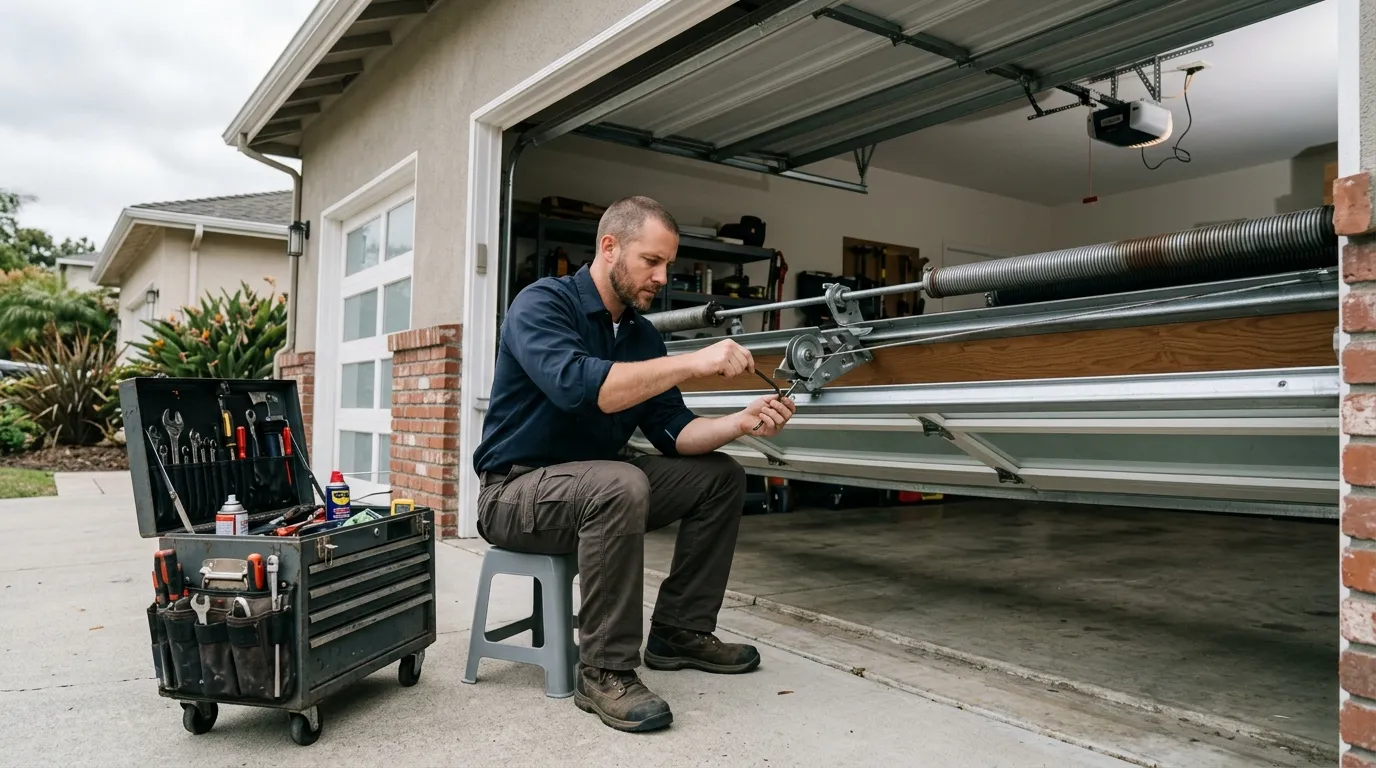
What isn't a DIY job: touching the torsion spring. A wound torsion spring on a door this size holds enough stored force to break bones or worse if the winding bar slips, and on 1970s hardware the mounting cone it's wound against may itself be corroded and more likely to fail under adjustment. This is the one place we'll tell you flatly to call rather than watch a video and try it.
If your door is sagging on one side, you can visually check whether it's the cable or the track before calling - that helps us bring the right part - but don't try to straighten a bent track yourself. On hardware this old, forcing it usually cracks a weld you can't see.
Questions
About 2 miles - Westwood is one of the closer towns in the area we cover from Ashland. That short drive doesn't change our pricing, but it does mean a tech can go back to the truck for a specific part without derailing the rest of the day's calls.
Most Westwood houses were built right around 1973, and doors from that era use torsion springs, rollers, and track hardware sized differently than modern doors. We carry parts sized for that period specifically because it's what we run into most often here.
Yes. This area sits in a cold climate band with severe winters, and repeated freeze cycles fatigue torsion springs faster, especially ones that are already decades old. Combined with 1970s-era hardware, that's the most common reason springs snap here.
Lubricating rollers and hinges and tightening visible hardware is fine to do yourself. Adjusting or replacing the torsion spring is not - it holds enough force to cause serious injury, and on hardware this old the mounting cone may be corroded too, which makes DIY adjustment riskier than usual.
Explore more
Ready when you are
Ashland Garage Door Pros repairs and installs garage doors, springs and openers in Ashland, KY and the surrounding area.