
Decades of hardware loosening
After five and a half decades, the track hangers on those original setups have usually been re-shimmed or re-nailed more than once, and the brackets holding the track to the framing loosen a little more each winter.
Russell, Ashland
Russell homes mostly went up around 1967, a few years ahead of the wider Ashland area. That earlier build window shapes what's stuck in the track. We drive out from Ashland.
Symptoms
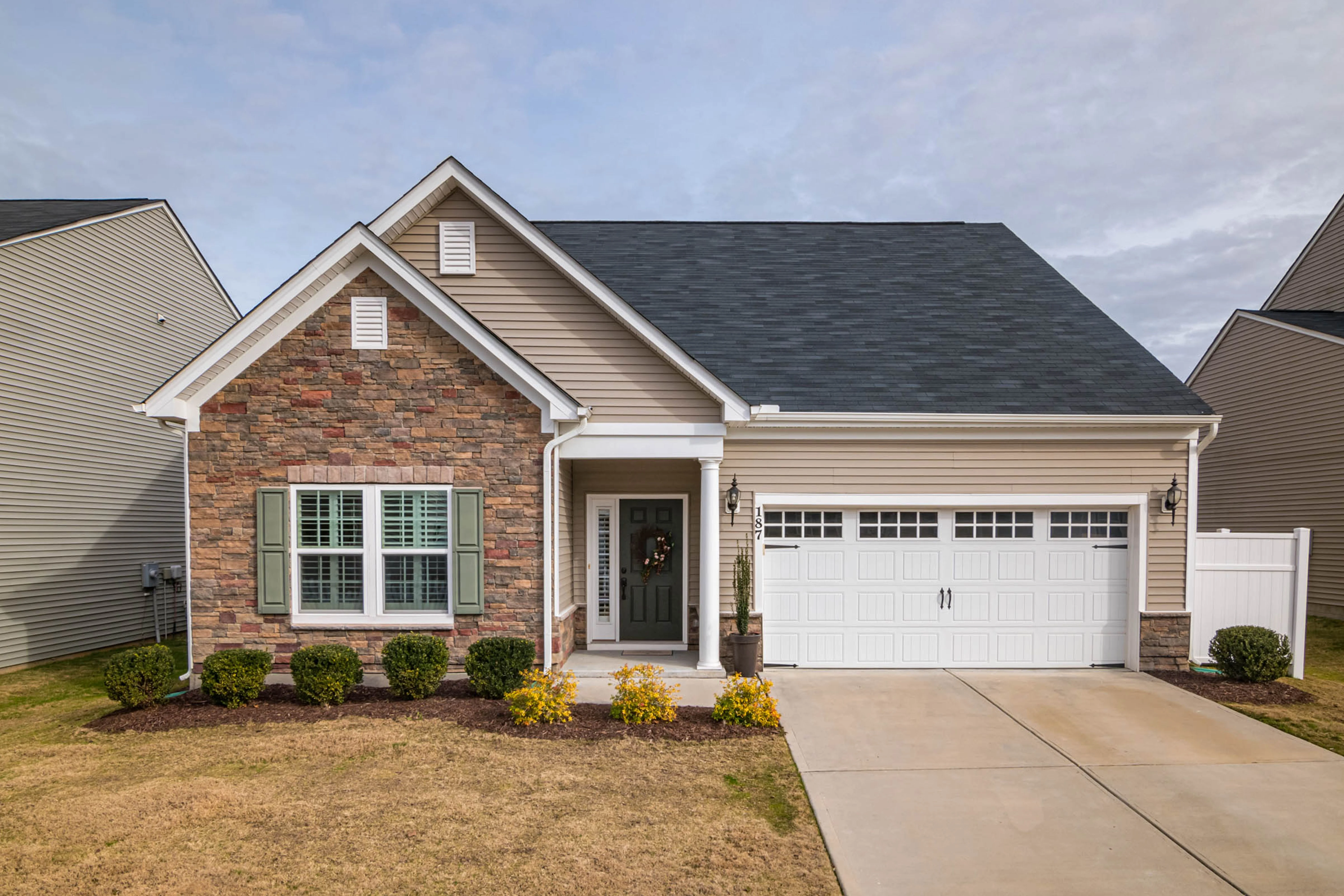
Most houses in Russell went up around 1967, a bit earlier than the 1970 median across the rest of the Ashland service area. Doors installed on houses from that window were almost always steel sectional units on rolled steel track, hung with extension springs overhead rather than the torsion setups you'd find on newer builds.
After five and a half decades, the track hangers on those original setups have usually been re-shimmed or re-nailed more than once, and the brackets holding the track to the framing loosen a little more each winter.
When a door comes off track in a house from that era, it's rarely the opener's fault. It's a bent section of track, a bracket that's pulled half its screws out of old framing, or a bottom roller that's worn enough to jump the rail on the next open.
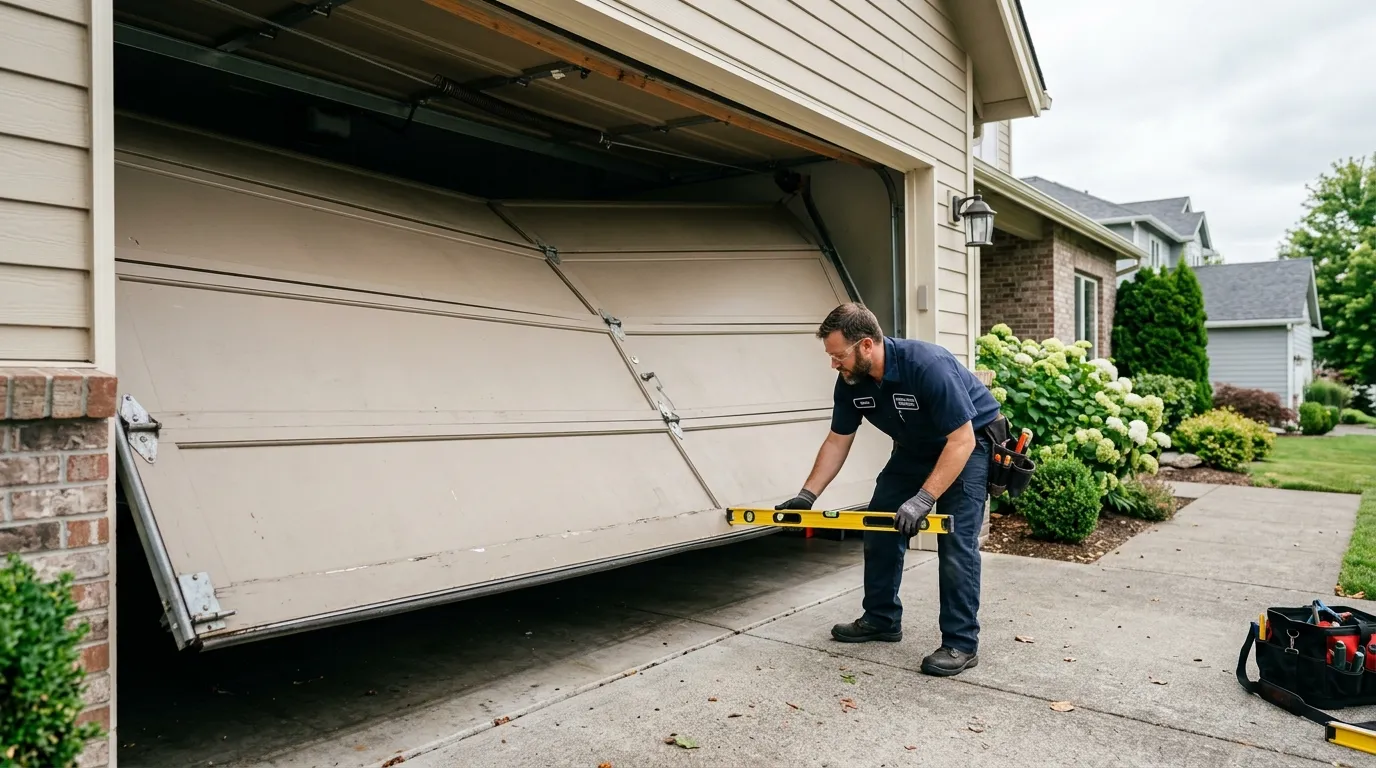
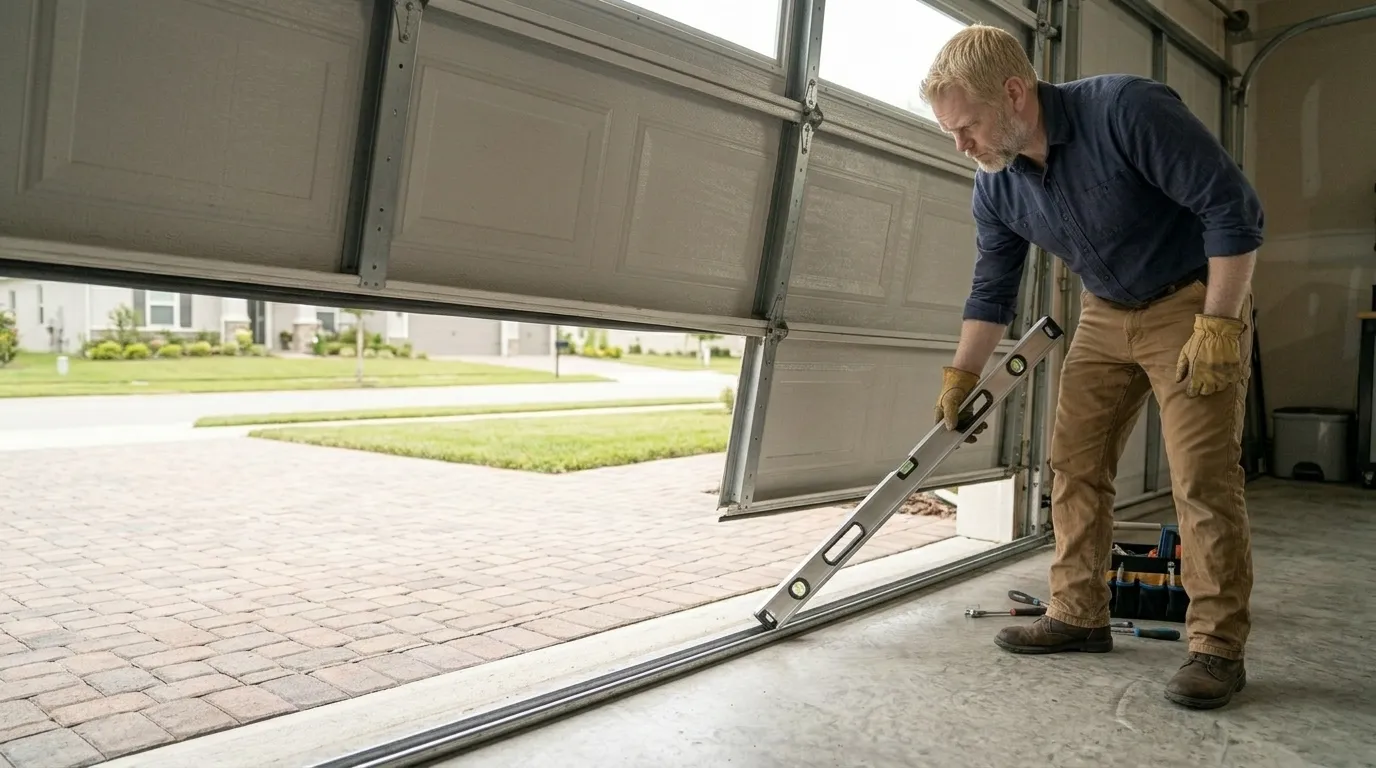
You'll see the door hang crooked, catch partway up, or stop dead with one side higher than the other. Sometimes it's sudden - a bang and the door sags. Sometimes it creeps in over weeks, a little more shudder every time it runs.
Booking
We work out of Ashland, and Russell sits about 5 miles down the road, so a booked call is a short trip, not a cross-county haul. There's no separate branch or crew based in Russell itself - every job here is covered from the Ashland shop, same as the rest of the towns we reach. When you call, tell us what the door is doing: which side it's leaning, whether it moves at all, whether you've already tried closing it by hand. That tells us whether to bring extra track stock or just tools. We don't quote a fixed same-day promise here, because we're not staffed out of Russell directly - but the drive itself is short enough that it's rarely the bottleneck.
The repair
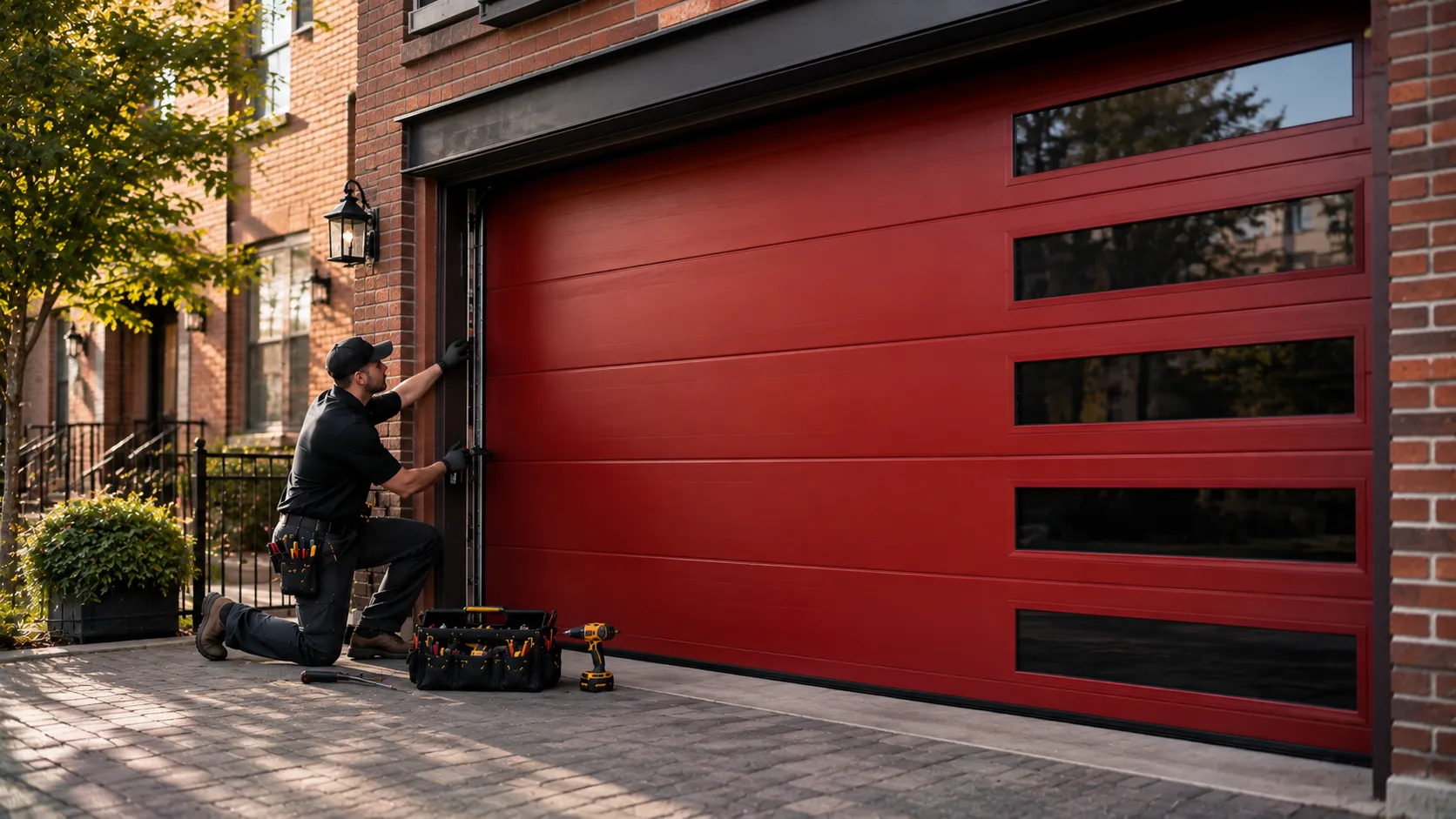
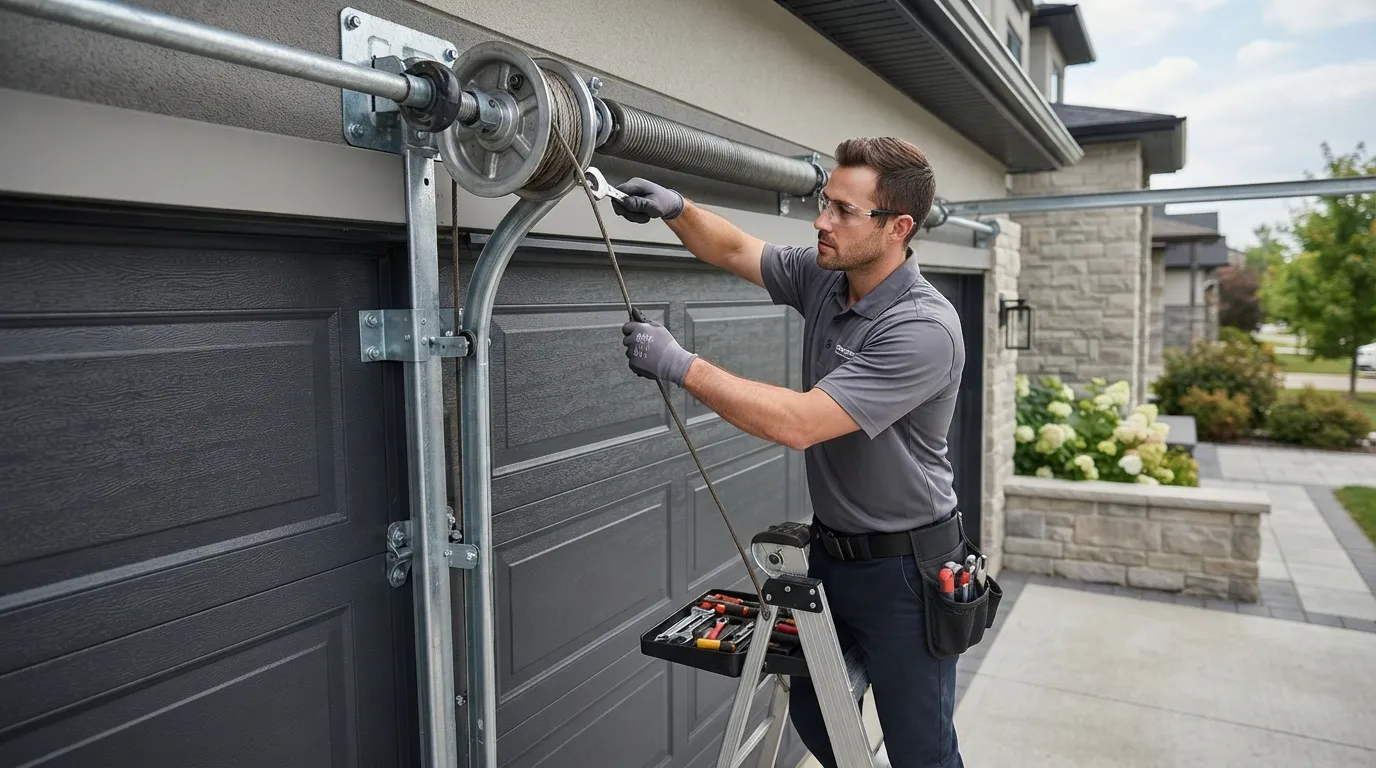
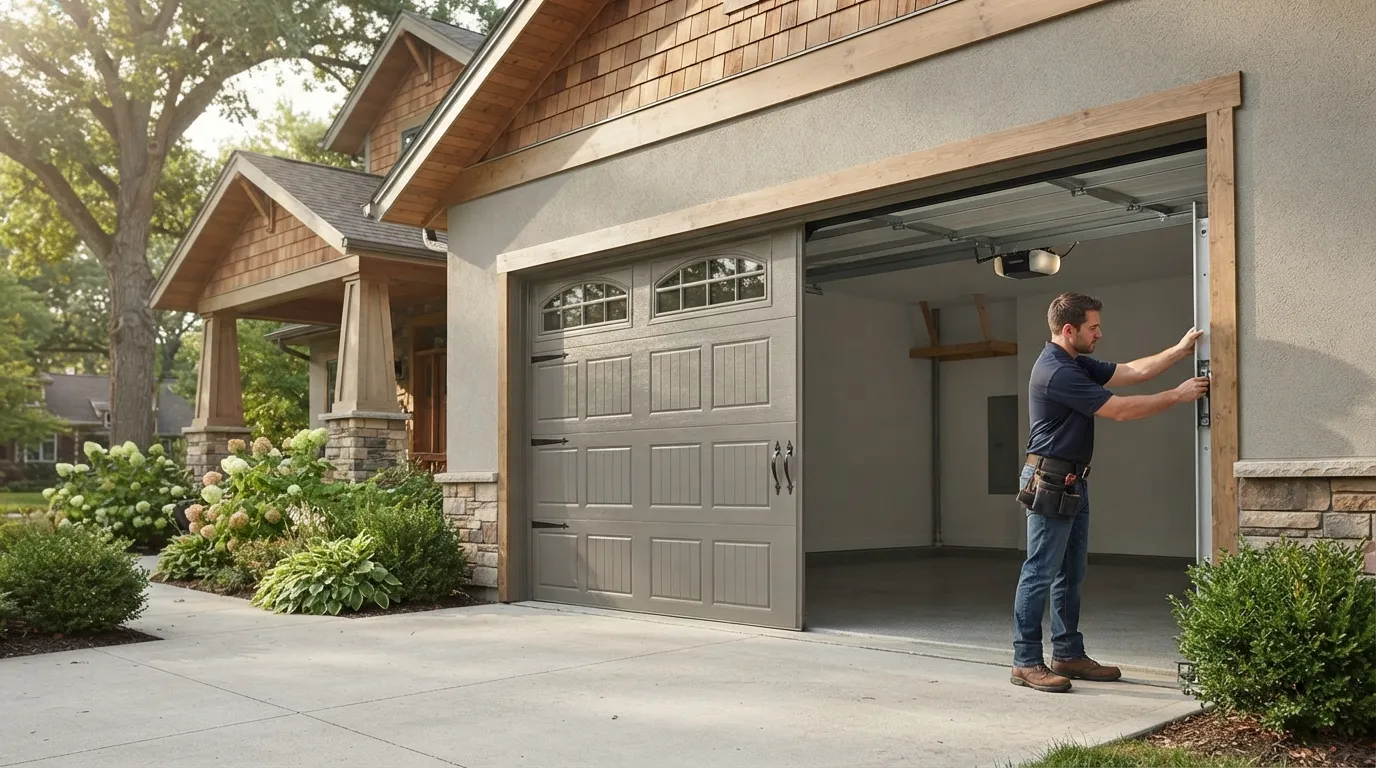
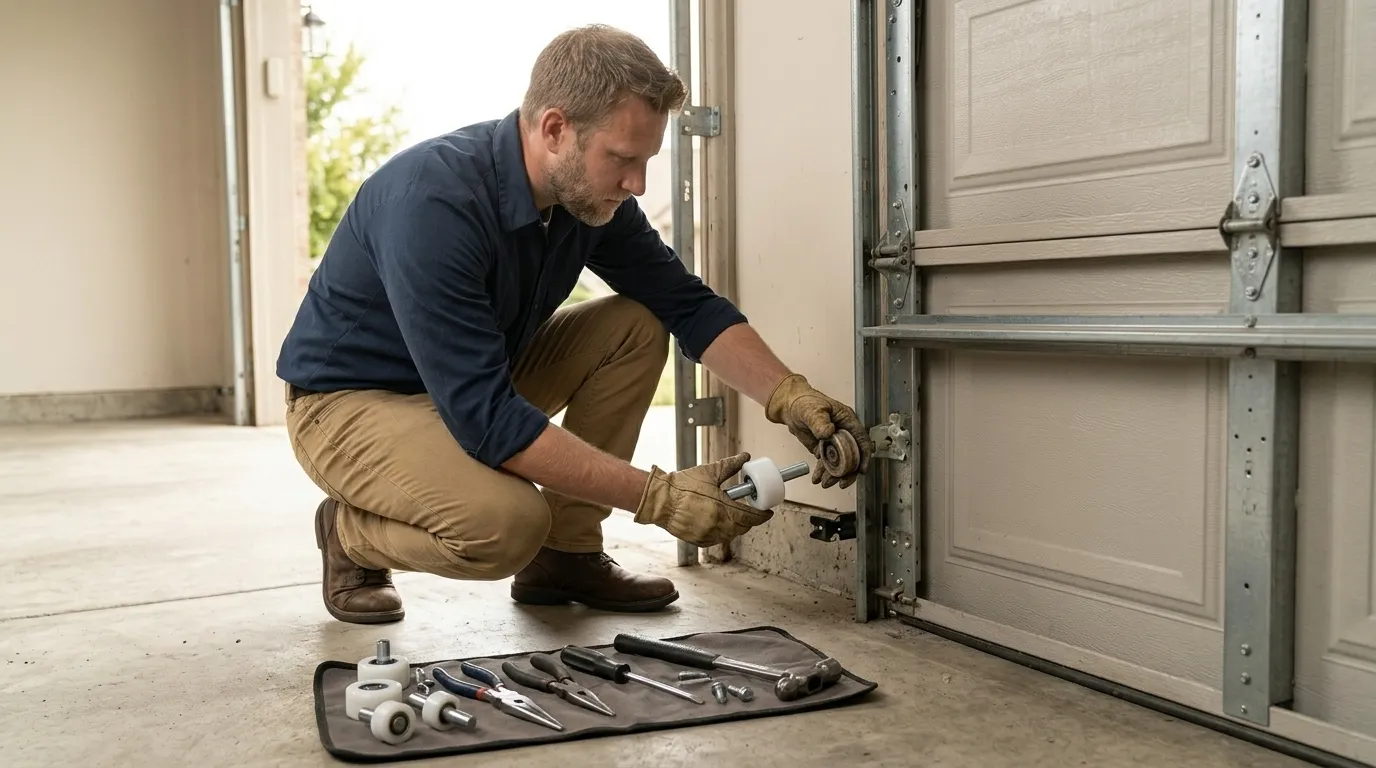
On a house from the late 1960s, the fix usually starts with the track itself. We take the door off the rollers, straighten or replace the bent section of track, and re-anchor the brackets into solid framing if the old screw holes have worn oval. If the rollers are the worn steel or nylon originals, they get swapped for something that'll actually stay in the rail. We check both vertical tracks for square against each other - a door can look level and still be running on tracks that have drifted apart at the top, which is often what knocks it off in the first place. On extension-spring setups, we also check the pulley and cable running to the spring, since a fraying cable will yank a door sideways the next time it's under tension. We don't replace parts that aren't causing the problem; if the track's fine and it's just one bad roller, that's the job.
DIY or pro
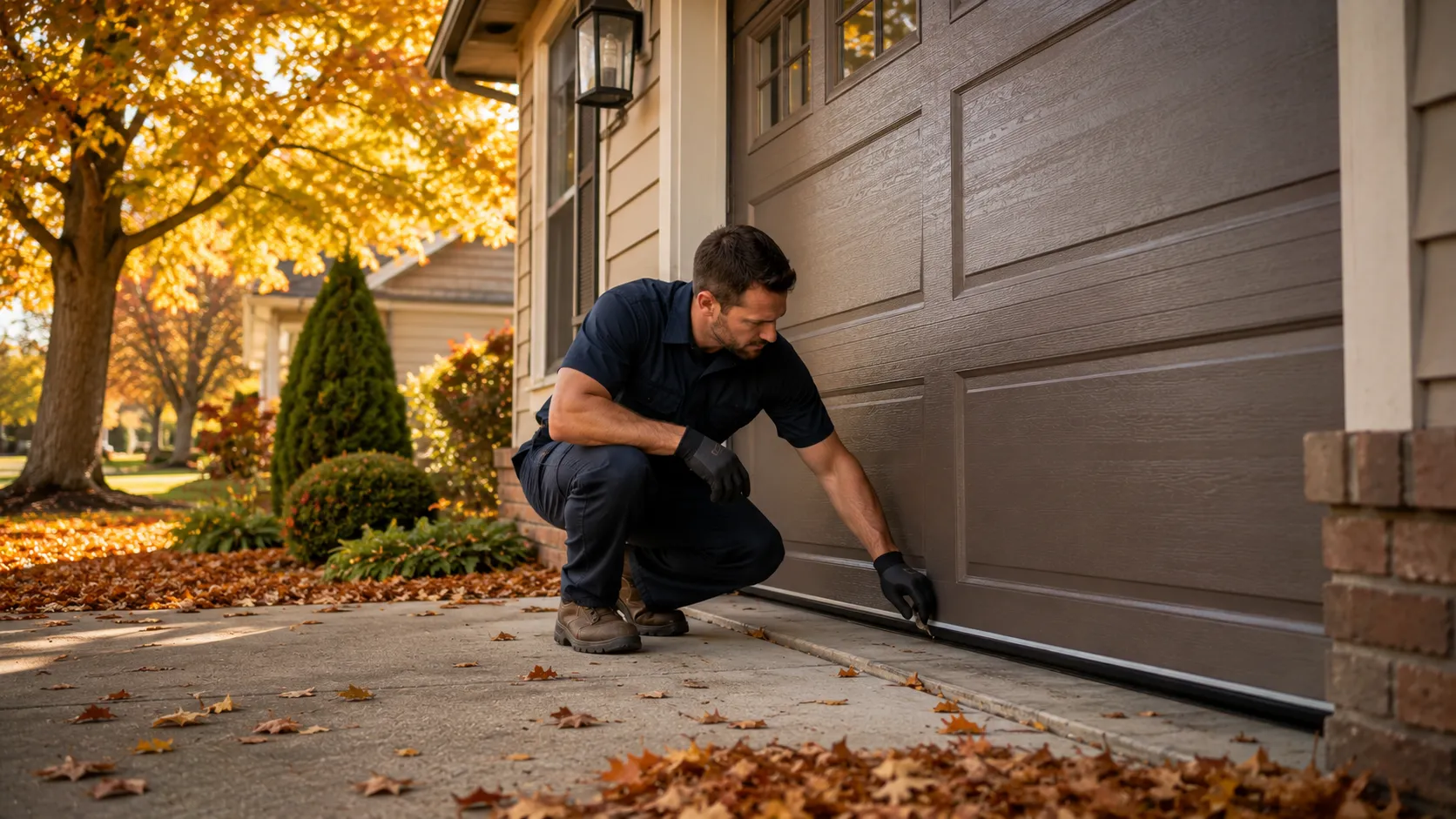
You can usually see if a door is off track just by looking - a visible gap between the roller and the rail, or one side of the door sitting lower than the other.
What you shouldn't do is keep running the opener trying to force it back in. That bends the track further and can pull the whole assembly loose from the wall.
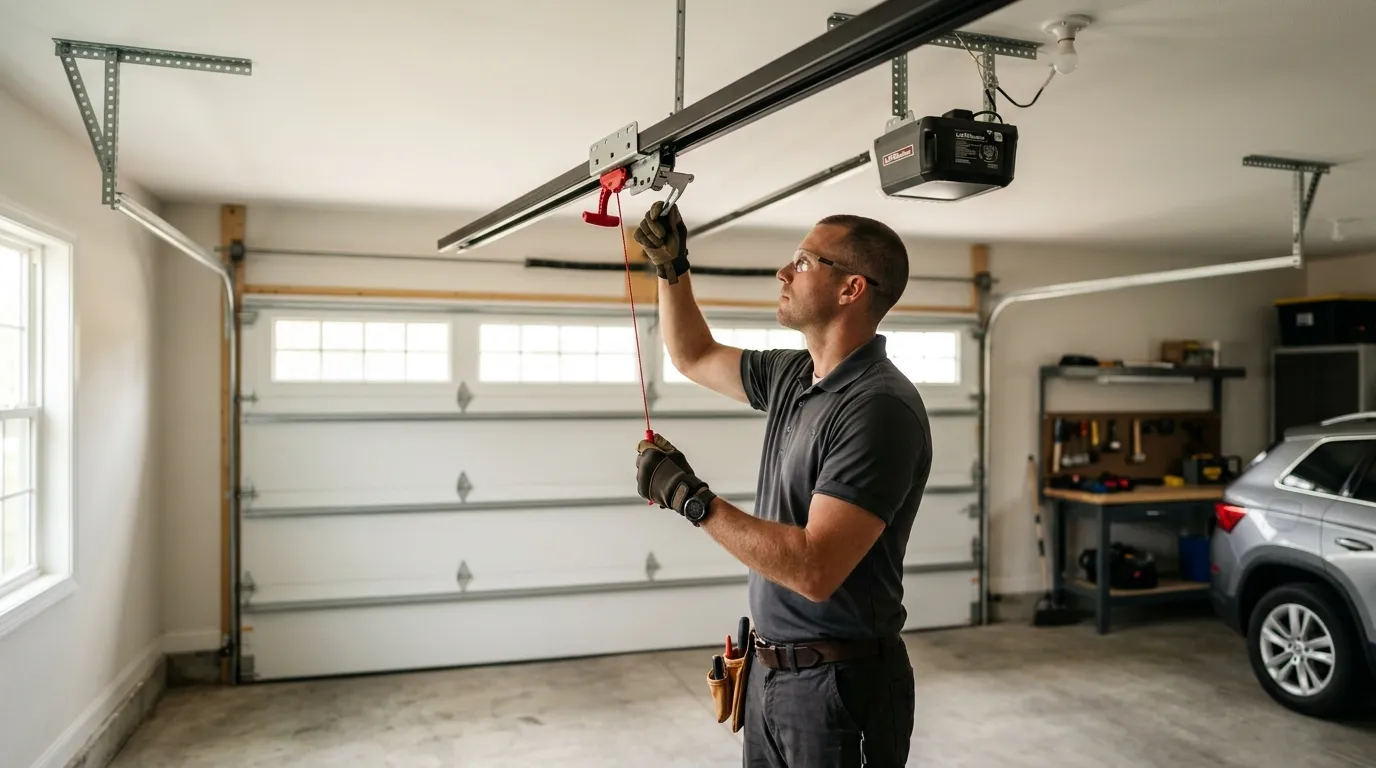
If the door is only partially open and jammed, disconnect the opener at the release cord and see if the door moves by hand - gently. If it won't budge or the spring side looks stressed, stop there.
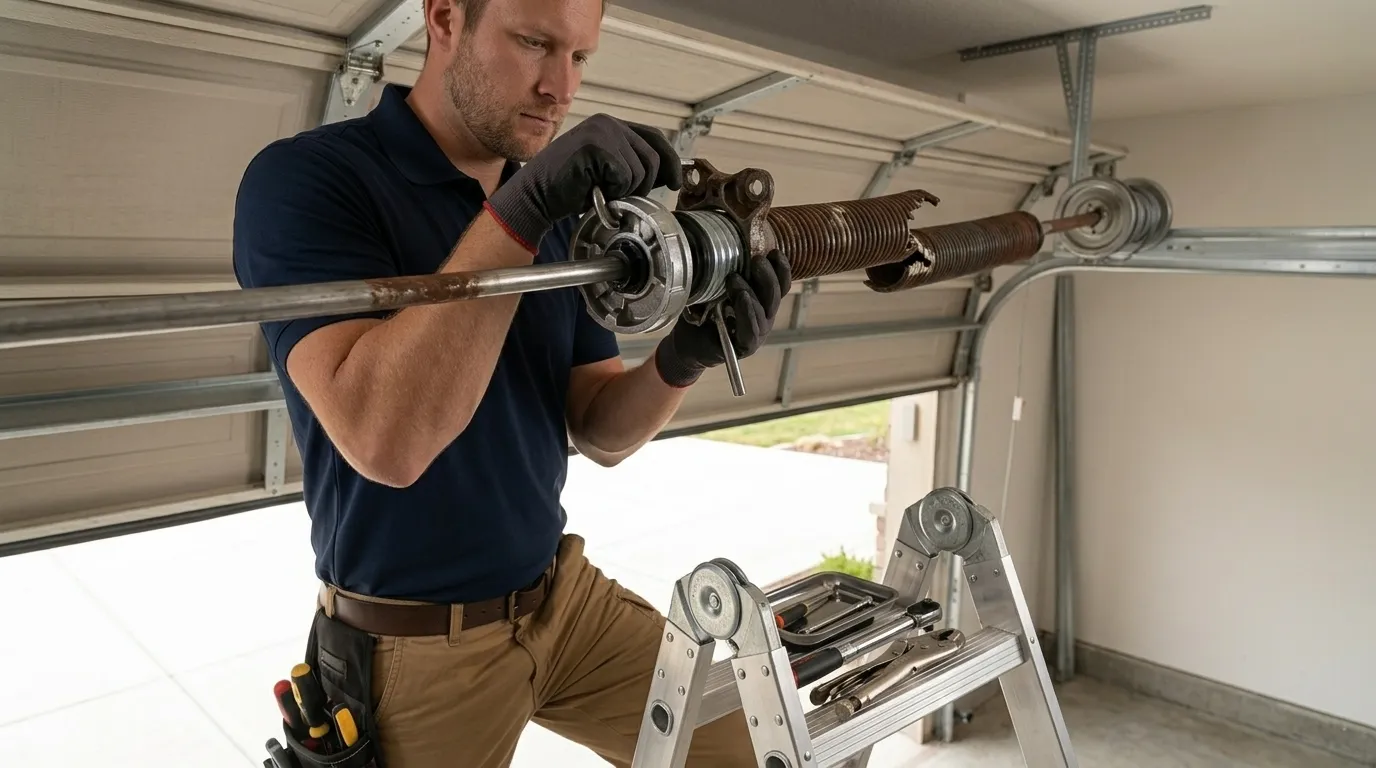
Springs on a house this age are original or close to it, and a spring under tension is the one part of this job we don't recommend touching yourself, loaded or not. That's a real limitation on the DIY side, not a sales line: a mishandled extension spring can do real damage, to the door or to you.

Job timing
An off-track repair on one of these older Russell doors usually runs a couple hours once we're on site - longer if the track on both sides needs re-anchoring into old framing, shorter if it's a single bent section and a bad roller. Houses built around 1967 tend to have wood jamb framing that's had five decades of expansion and contraction, so re-anchoring sometimes takes longer than the track work itself because we're finding solid wood to screw into. We don't rush that part. A bracket that's screwed into soft, split wood will just pull loose again in a year, and then you're back to square one.
On the truck
The truck carries the rollers, track sections, and cable that fit the steel sectional doors common on houses from the 1960s and 70s, since that's most of what we run into around here. Winters in this part of Kentucky sit in a severe cold band, and cold steel track gets brittle and grease gets stiff, which is part of why older track systems show wear faster than the door panel itself does. We stock for that. What we don't always have on the truck is an exact match for an obsolete decorative panel or a discontinued opener bracket - on some older setups the closest match is a compatible part, not identical, and we'll tell you that up front rather than swap it in quietly.
Questions
On a house built around 1967, it's usually not sudden even though it feels that way - a bracket or roller has been wearing loose for a while, and the door finally jumps the rail on one more open-close cycle. A bent section of track or a stretched cable on the extension-spring side can also do it in one motion.
No. We're based in Ashland, about 5 miles away, and we cover Russell from there. There's no separate Russell branch, so a call here means a short drive for us, not a local dispatch.
Don't force it with the opener running - that bends the track further. You can disconnect the opener and try moving the door by hand carefully, but if it won't budge or the spring side looks under load, stop and call. Spring tension on an older door isn't something to handle solo.
Rollers, track, and cable for that generation of steel sectional doors are common enough that we usually carry them on the truck. Exact matches for old decorative panels or discontinued opener brackets are less certain - we'll say so before we use a compatible substitute instead.
Explore more
Ready when you are
Ashland Garage Door Pros repairs and installs garage doors, springs and openers in Ashland, KY and the surrounding area.