
1973 construction era effects
That matters because Flatwoods houses skew a little later than a lot of what we see - the median build year here runs around 1973, right at the tail end of the wider 1956-1979 stretch across the service area.
Flatwoods, Ashland
Six miles from our Ashland shop, Flatwoods homes built mostly in the early 1970s carry original hardware that needs specific parts on the truck before we leave.
DIY or pro
Flatwoods sits six miles from our shop in Ashland, close enough that a call here doesn't turn into a half-day trip, but far enough that we load the truck before we go rather than turning around for a part.
That matters because Flatwoods houses skew a little later than a lot of what we see - the median build year here runs around 1973, right at the tail end of the wider 1956-1979 stretch across the service area.
If your door is original to the house, you're looking at hardware from the early-to-mid '70s: torsion springs on a stationary cone, tracks with fewer safety features than anything sold today, and openers - if there's a powered one at all - that are long past any warranty. Before you touch anything yourself, know what you're dealing with.
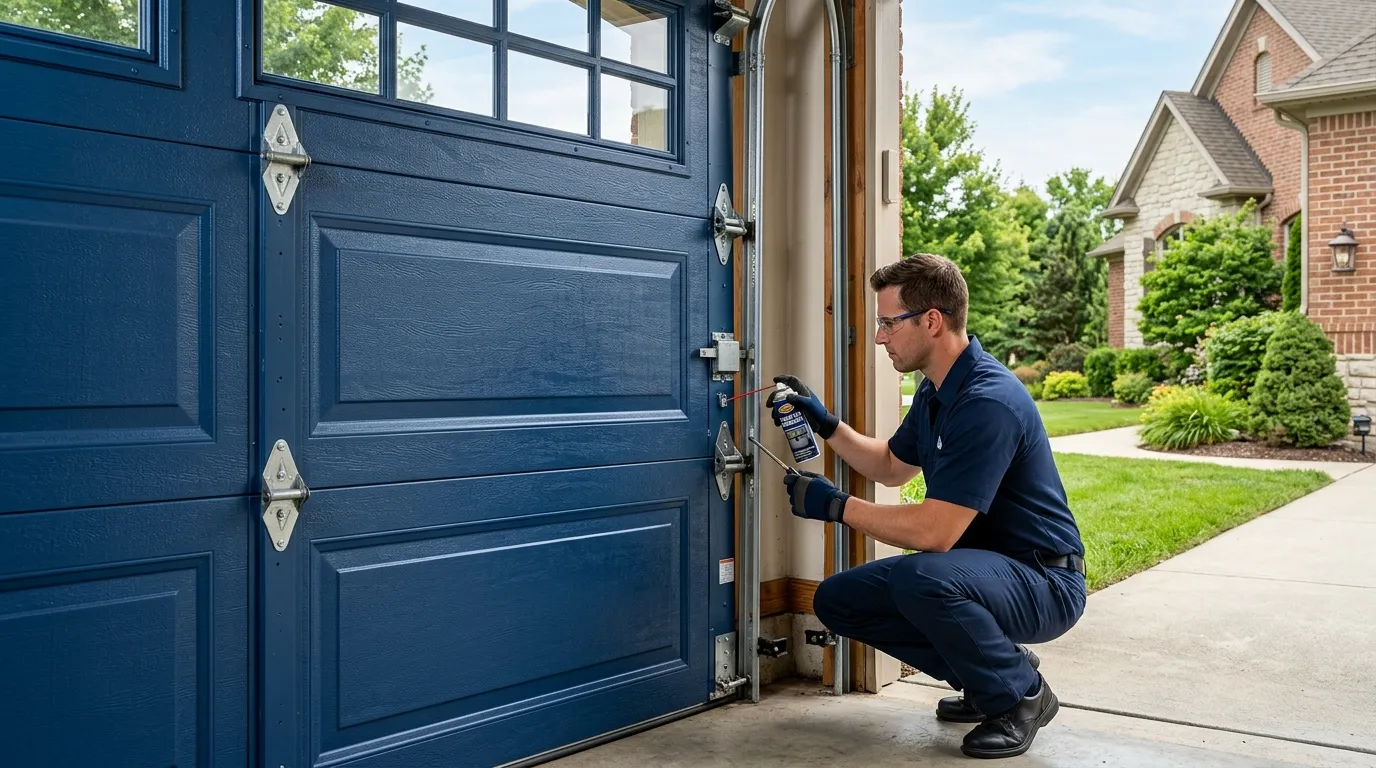
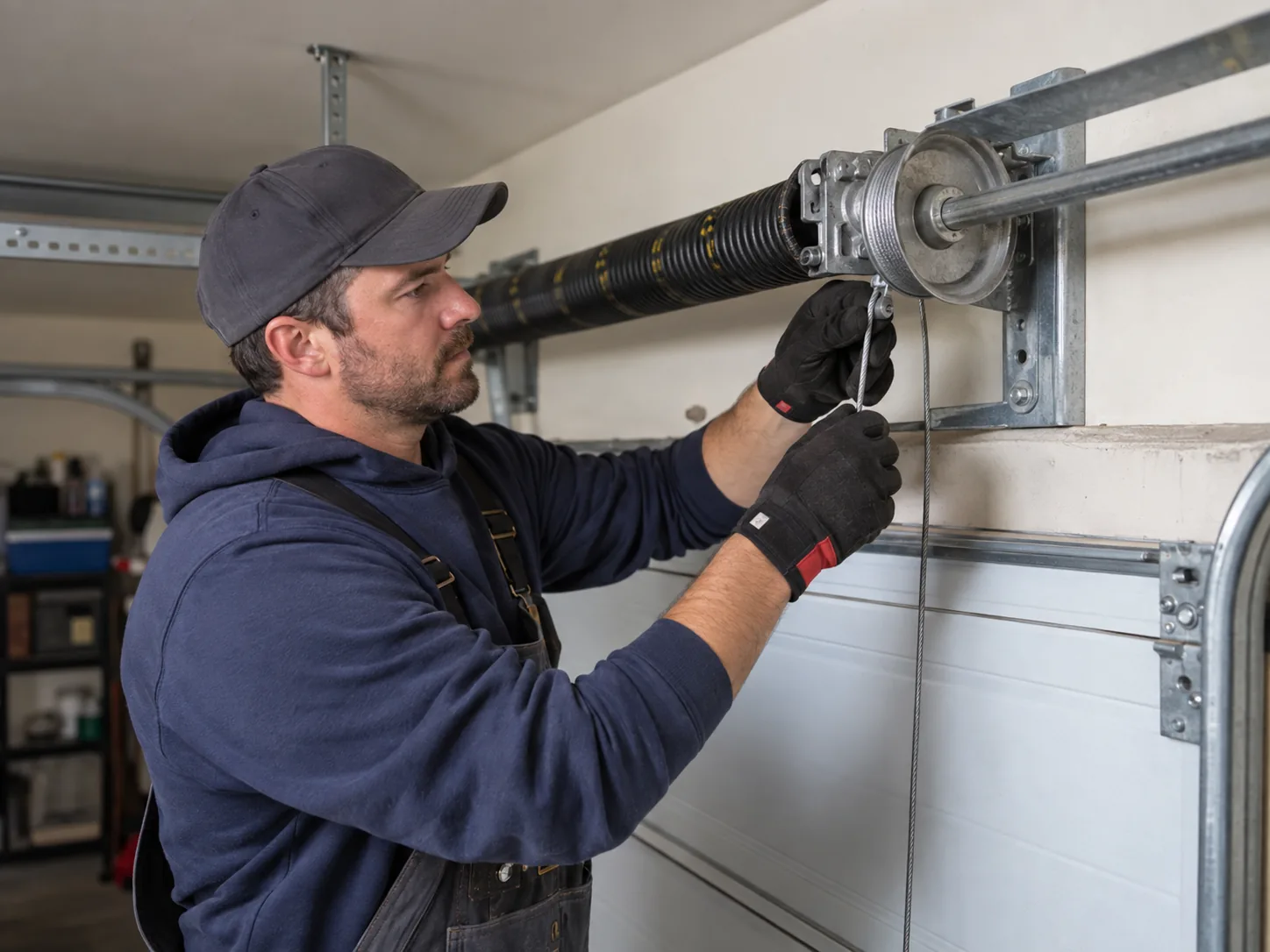
A broken torsion spring under tension can put someone in the hospital, and on a door this age the winding cone itself may be worn enough that it doesn't hold the way it should even after a new spring goes in. Lubricating hinges and rollers, tightening loose bolts on the track brackets, and checking that the photo-eye sensors aren't caked in dust - those are fair game for a homeowner. Springs, cables, and anything involving the torsion bar are not.
Booking
We work Flatwoods as one stop on the route out of Ashland, not as a separate branch, so there's no local office and no crew stationed here waiting on calls.
When you book, tell us the age of the house if you know it - a door original to a 1971 build gets a different truck load than one installed in a 2005 remodel.
Six miles is a short drive, which means we're not padding your appointment window to account for distance the way we might for Grayson or Greenup further out. Winters matter for how we schedule, too.
This region sits in a cold-severe climate band, and a cold snap doesn't just make steel brittle - it also means openers with weak or aging drive gears tend to fail on the coldest morning of the year, which is exactly when everyone else is calling too. If you've got a door that's been groaning or slow to close, don't wait for the first hard freeze to book it.
Job timing
Most Flatwoods jobs run the same length as any straightforward spring or opener repair - the drive doesn't add much given it's only six miles from Ashland. Where the clock actually moves is the age of the hardware. A door still running its original 1970s-era torsion assembly usually takes longer to service than a newer one, because we're often replacing brackets and fittings that were never designed to be swapped independently - they were built as one long-lasting unit, not a set of interchangeable parts.
If the opener is original too, expect the job to run longer still. Chain-drive units from that era used gear sets and limit switches that don't match anything on the shelf at a hardware store, so diagnosing a dead opener sometimes takes as long as fixing it.
On the truck
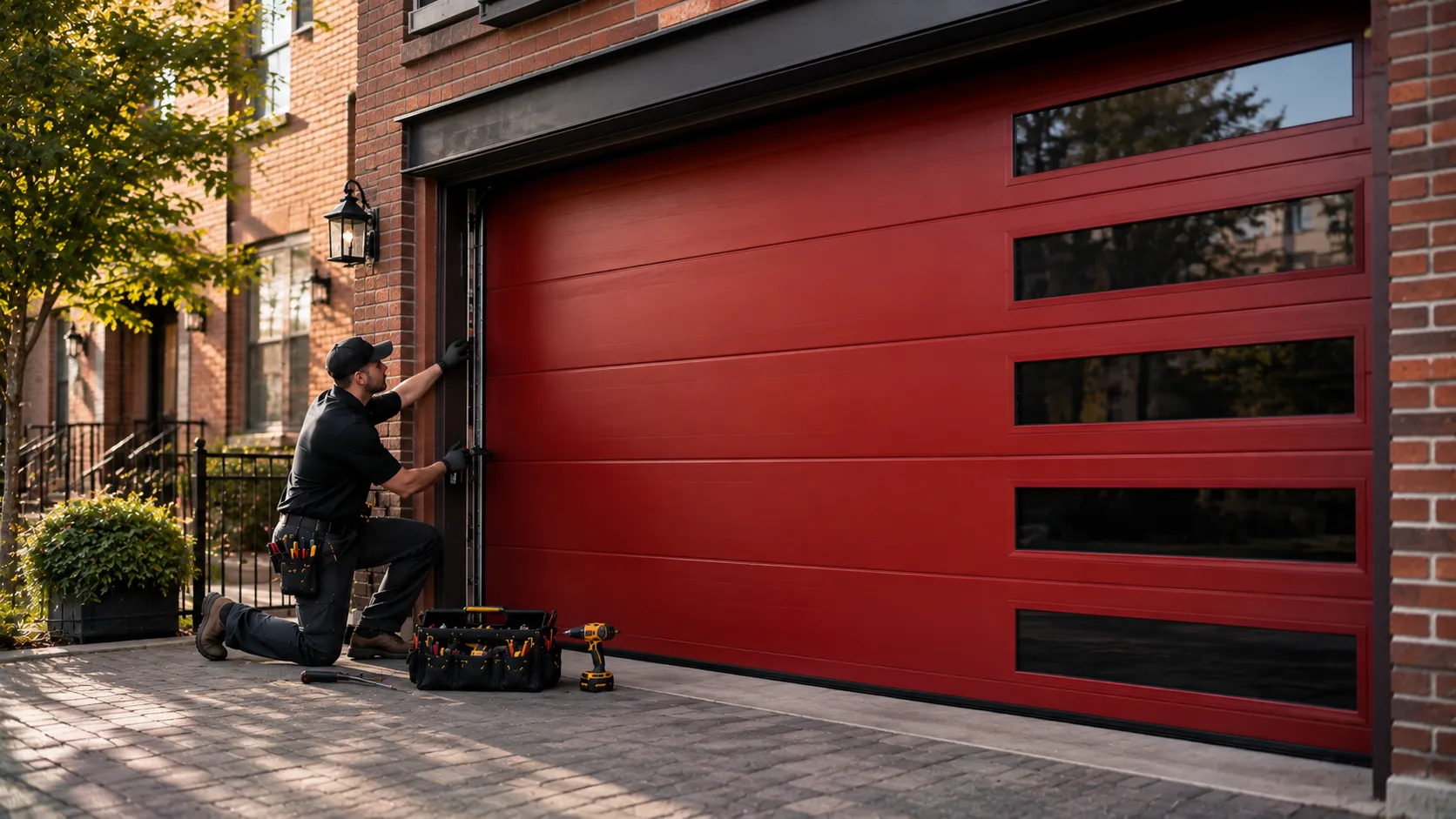
We stock what actually shows up on the trucks working this area, and Flatwoods' housing stock - built mostly in the early 1970s - tells us what that needs to include: torsion springs sized for the door widths common to that era, stationary cones that match older winding shafts, and extension spring kits for the smaller detached garages that never got upgraded to torsion setups.
What we don't carry is anything specific to a brand that stopped making parts decades ago. If your opener is an obscure or discontinued model, we may need to order the exact gear or logic board rather than pull it off the truck same-visit.
That's the one honest limit here - we'd rather tell you upfront that a part is on backorder than promise a same-day fix we can't deliver.
Watch-outs
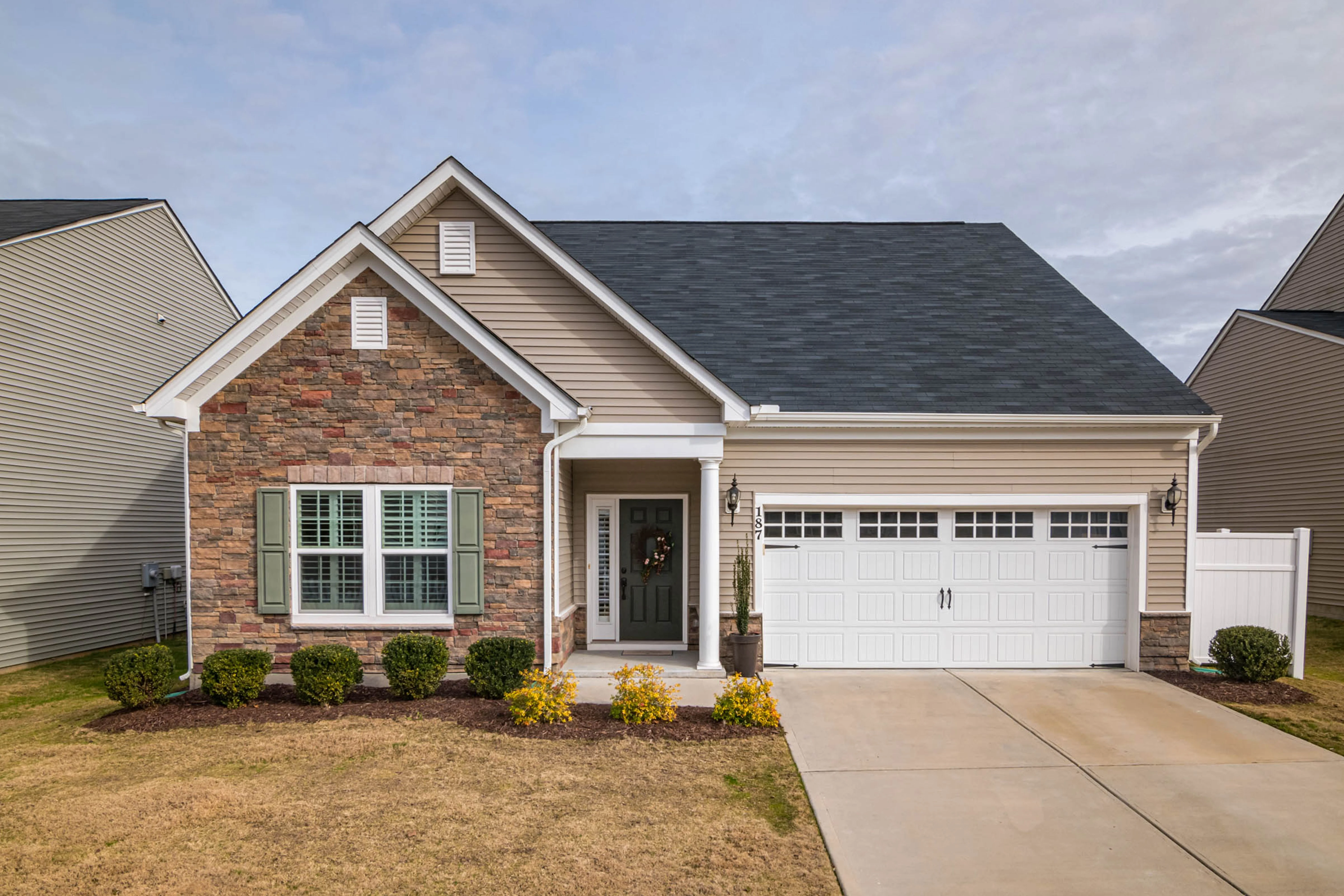
The complication in Flatwoods isn't the drive, it's the mix of ages. The area sits inside a service region where the broader housing stock runs 1956 to 1979, but Flatwoods itself leans later within that window - a decade newer in places than what we see out toward Westwood or Catlettsburg. That means two houses on the same street can have entirely different door generations: one still on its first-ever torsion spring, the next already through a full replacement in the 1990s.
Income here also runs a bit higher than the wider service area's median of $53,046, and we mention that only because it shapes the calls we get - more requests for full opener upgrades rather than patch repairs, and more people asking about insulated panels for a cold-severe winter rather than just fixing what's broken. Neither call is wrong. We just don't guess which one you want before we show up.
Questions
About six miles. It's one of the closer stops on our route, so there's no extra travel charge built in the way there might be for towns further out like Greenup or Grayson.
If your house was built anywhere close to the local median, the door hardware is probably early-1970s. That means a torsion spring on a stationary cone and a track system that predates most of today's safety standards. Worth a look before it fails on its own.
No. We run out of Ashland and cover Flatwoods as part of that route. There's no separate office here, just a short drive for the truck when you call.
Hardware from the early 1970s was often built as one long-lasting assembly rather than separate swappable parts. Replacing a spring sometimes means replacing brackets and fittings at the same time, which adds time you wouldn't see on a newer door.
Explore more
Ready when you are
Ashland Garage Door Pros repairs and installs garage doors, springs and openers in Ashland, KY and the surrounding area.